
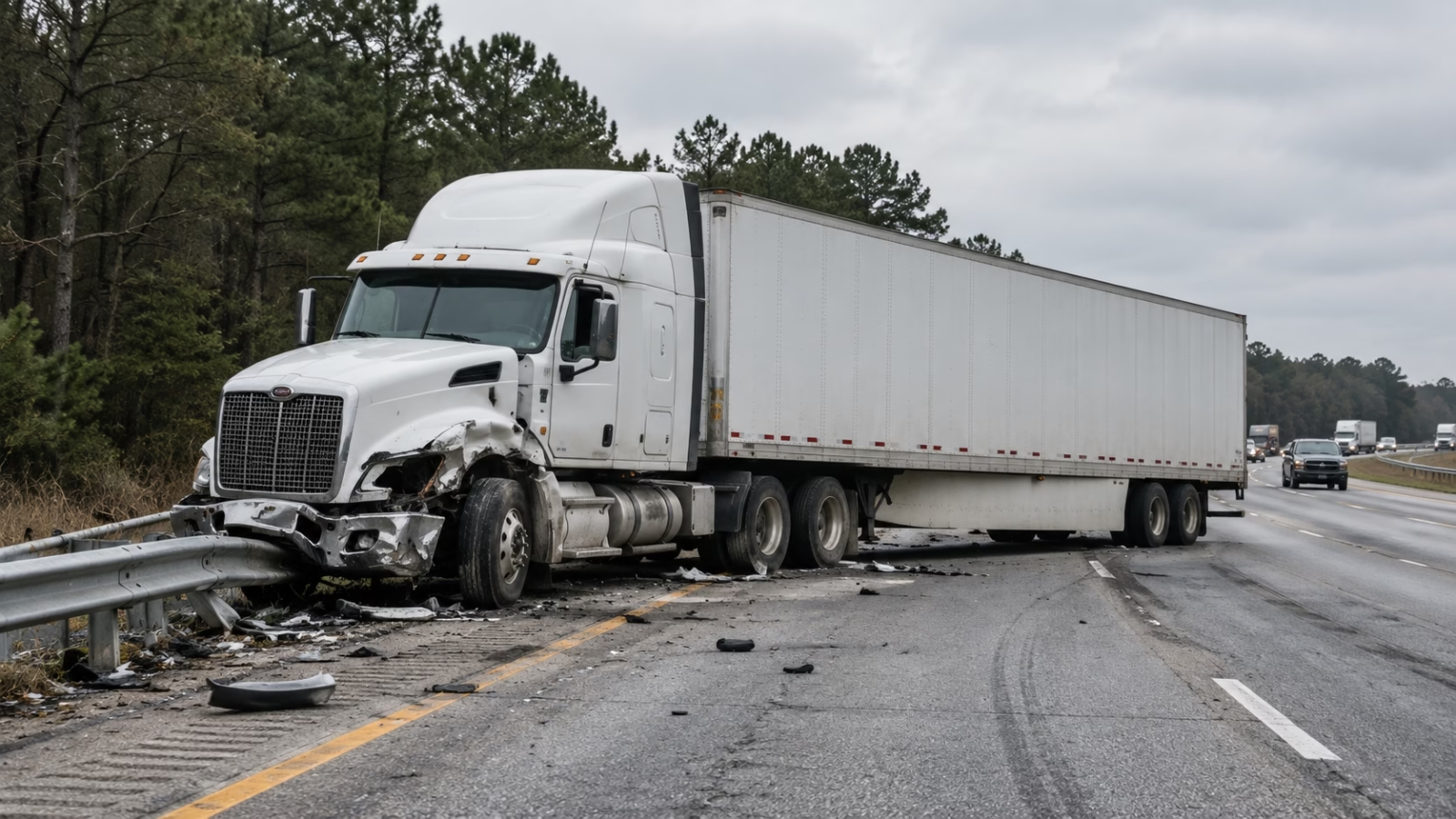
Featured image: AI-generated illustration; not a photograph of the crash discussed below.
A $32.5 million Georgia truck accident settlement raises an important question for Atlanta families: what does a major recovery actually mean for the people left behind? The headline matters, but understanding the difference between an announced total, individual payments, and compensation for a lifetime of loss is more useful than treating one case as a settlement calculator.
This article examines a publicly reported fatal semi-truck case and explains what Atlanta drivers and families can learn about evidence, insurance, and damages. The crash occurred near Camilla in southwest Georgia, not in Atlanta. It is discussed as an educational example, not presented as a result obtained by Thomas Kennedy Sampson & Tompkins LLP.
The $32.5 million settlement: what was reported?
According to the Atlanta Journal-Constitution’s February 2024 report, insurers paid $32.5 million to resolve claims arising from Christopher Crump’s death. The 32-year-old Army veteran left a wife and four daughters.
On December 7, 2021, a tractor-trailer pulled into his path on State Route 300 outside a processing plant in Mitchell County. His car became trapped beneath the trailer. The lawsuit alleged problems involving trailer lighting, reflective tape, and the driver’s qualifications. Those were allegations; the defendants denied wrongdoing and liability.
The reported amount included attorney fees and litigation costs. The article did not disclose each family member’s net payment. It would therefore be inaccurate to divide the total by five or describe the entire amount as money personally retained by the family.
A settlement is different from a verdict or a net payout
These terms answer different questions. A settlement describes an agreement to resolve claims. A verdict describes a jury’s decision. A net payout describes what a claimant receives after applicable deductions and distributions. Mixing them together can give an injured person unrealistic expectations.
A verdict may face post-trial motions, appeals, or collection issues. A signed settlement may still require releases, lien resolution, or approval procedures before funds are distributed. When reading about any major truck accident recovery, ask whether the source reports an agreement, an award, or an actual payment.
For an individual client, the useful document is an itemized settlement statement. It should identify the total recovery, the agreed fee, expenses, any applicable reimbursement obligations, and the amount available for distribution. Questions about those entries deserve clear answers before a settlement is finalized.
Why this case matters to Atlanta truck accident victims
The same investigative questions can arise after a tractor-trailer collision on I-285, I-75, I-85, or a surface street near an Atlanta distribution facility. Did the driver have enough space to complete a turn? Could approaching motorists see the trailer? Who maintained the equipment? What did the company know before dispatch?
The location and evidence in each collision are different. A rural nighttime crossing cannot simply be equated with an interstate rear-end crash. The transferable lesson is to examine the entire transportation operation instead of assuming the police report tells the complete story.
For information about representation after an Atlanta semi-truck crash, visit TKST’s Atlanta truck accident lawyer page. A focused investigation should connect a specific unsafe act to the collision and the resulting harm.
Three safety questions that can change an investigation
1. Was the trailer visible to approaching traffic?
Visibility is more than whether headlights were switched on. Investigators may examine the trailer’s position, side lighting, reflective markings, roadway illumination, weather, sight distance, and the time available to react. Photographs taken after vehicles have moved may not recreate what a driver actually encountered.
Federal requirements for lamps and reflective devices address equipment intended to make commercial vehicles visible. Applicable requirements depend on the vehicle and its specifications. An expert may need to compare the actual equipment with the rules and reconstruct the lighting conditions.
A missing or damaged component does not by itself explain the whole collision. The analysis must establish whether the condition contributed to the crash, while accounting for the actions of everyone involved.
2. Were inspection and repair responsibilities fulfilled?
Federal motor carrier maintenance rules require systematic inspection, repair, and maintenance of covered vehicles. Relevant records can include inspection reports, repair invoices, defect notices, and documents showing when equipment returned to service.
A maintenance invoice is a starting point, not necessarily proof that a defect was corrected. Comparing dates, mileage, reported symptoms, and later inspections can reveal whether the paperwork matches the equipment’s actual condition. The truck and trailer may have different owners or maintenance arrangements, making identification of each responsible entity essential.
3. What do the driver’s work records show?
In a separate investigation involving possible fatigue, electronic logs and dispatch records can be important. The FMCSA’s hours-of-service summary describes limits that generally allow covered property-carrying drivers up to 11 hours of driving after 10 consecutive hours off duty, within a 14-hour window. Exceptions and other requirements apply.
Logs should be considered alongside delivery appointments, communications, and available vehicle data. A log entry alone cannot establish alertness. These are general investigative considerations, not assertions that fatigue caused the case discussed above.
What evidence should be preserved after a semi-truck crash?
Commercial vehicle claims can involve information held by several businesses. Some records may be overwritten or lost during ordinary operations, so preservation should begin promptly. An attorney can identify likely custodians and request that relevant materials be retained.
- Vehicle evidence: available event data, dashcam recordings, photographs, damage patterns, and the truck and trailer themselves.
- Operational evidence: dispatch messages, delivery schedules, driver logs, inspection reports, and maintenance records.
- Scene evidence: witness accounts, nearby business video, roadway measurements, and responding officers’ observations.
- Loss documentation: treatment records, employment information, care needs, and records of expenses caused by the collision.
Availability varies. Not every truck records the same data, and not every camera retains footage for the same period. Families should preserve their own photographs and messages without altering files or attempting to retrieve equipment from a commercial vehicle themselves.
An effective preservation request identifies relevant vehicles, dates, systems, and categories of information. It should be followed by a plan for obtaining and examining the evidence. Sending a letter is only one step in building a reliable factual record.
What determines an Atlanta truck accident settlement?
There is no dependable formula that turns a diagnosis or repair bill into a settlement. The evaluation combines proof of responsibility, the nature and duration of the losses, available coverage, and the uncertainties of litigation. A dramatic headline supplies none of those details for another person’s claim.
The strength of the liability evidence
Clear video, reliable witness accounts, and consistent physical evidence can strengthen a claim. Conflicting accounts, uncertain causation, or disputes about the injured person’s conduct may change the analysis. Identifying an additional business does not automatically make that business liable; its actual role and legal duties must be established.
The consequences of the injury
A short recovery and a permanent loss of independence create very different needs. A serious injury evaluation may address future treatment, rehabilitation, changes in earning ability, assistance at home, and the effect on ordinary activities. Those projections should be supported by records and appropriate professional opinions.
For someone with a traumatic brain injury, returning to work may involve more than physical healing. The relevant question is how documented limitations affect that particular person’s responsibilities, relationships, and daily life.
Wrongful death and the family’s legal claims
Fatal crashes require a different analysis. Georgia’s wrongful death statute addresses recovery for the full value of the deceased person’s life and identifies rights of surviving spouses and children. Separate estate claims may also require evaluation.
Determining who can bring a claim and how proceeds must be distributed is not simply a matter of counting relatives. TKST’s wrongful death practice page explains the firm’s representation of families facing these losses.
Insurance and practical recovery issues
A serious loss does not guarantee sufficient coverage. Counsel may need to examine the carrier, equipment ownership, contractual relationships, and potentially applicable insurance policies. Coverage disputes and competing claims can affect the path to resolution. Settlement discussions should address collectability as well as the amount demanded.
Why an early offer may leave important questions unanswered
An offer made before the medical picture is clear may be difficult to evaluate. A person may still be awaiting surgery, rehabilitation assessments, or a reliable prognosis. Accepting a release can close claims before the full impact is understood.
Before deciding, ask what future losses the offer accounts for, what evidence remains outstanding, and which people or companies the release covers. Ask for an explanation of likely deductions and the risks of continuing the case. A sound decision weighs the available evidence and the client’s circumstances, rather than copying another family’s result.
Preparation also helps families distinguish immediate financial pressure from the long-term consequences of an agreement. Keeping organized records of missed work, transportation expenses, treatment, and assistance can make those conversations more concrete.
How a well-supported claim moves toward resolution
Building a truck accident claim involves more than collecting a stack of records. Each item should answer a question: what happened, who controlled the relevant conduct, what harm followed, and what support the injured person will need. Organizing the evidence around those questions helps expose gaps before negotiations begin.
For example, a reconstruction may explain vehicle movement without addressing a survivor’s future care. Medical records may document treatment without establishing why a trucking company was responsible. A complete presentation connects these separate issues while identifying uncertainties honestly.
Once the evidence supports an evaluation, the parties may exchange settlement demands, discuss their positions, or participate in mediation. Settlement can occur at different stages. Some disputes require litigation to obtain testimony or records that were unavailable voluntarily. Others turn on disagreements about how the law applies to established facts.
Families should expect understandable updates about what has been obtained, what remains disputed, and what the next step is intended to accomplish. Useful questions include whether additional experts are needed, whether future care has been evaluated, and whether all potentially responsible parties have been identified.
The decision to accept an offer belongs to the client, informed by advice about the evidence and alternatives. A persuasive presentation can support negotiations, but no investigative technique, expert opinion, or prior recovery can guarantee that the opposing parties will agree to a particular amount.
Questions Atlanta families often ask
Is there an average Atlanta truck accident settlement?
Publicly advertised results are not a representative dataset. Many settlements remain confidential, and published examples often involve unusually serious harm. A meaningful assessment requires the facts of your collision, documented losses, liability evidence, and available insurance.
Does a safety violation guarantee compensation?
No. A violation can be important evidence, but a claim still requires analysis of responsibility, causation, damages, and applicable law. Investigators should explain how the specific unsafe condition affected the collision rather than relying on a checklist of technical defects.
How long do I have to bring a claim?
Georgia’s general personal injury limitations statute provides a two-year period, but exceptions, different claims, and other requirements can change the analysis. Claims involving government entities can involve earlier notice requirements. Have the applicable deadlines evaluated promptly; insurance negotiations should not be assumed to extend them.
What should I bring to an initial consultation?
Bring the crash report if available, photographs, insurance correspondence, treatment information, and a brief timeline. Include the truck’s company name or identifying numbers if you have them. Missing documents should not prevent you from asking for help; identifying what still needs to be obtained is part of the consultation.
Discuss an Atlanta truck accident claim with TKST
After a serious truck crash, the most useful questions concern your evidence, your losses, and the steps needed to protect your claim. Large published recoveries can illustrate the stakes, but they cannot predict an individual outcome.
Thomas Kennedy Sampson & Tompkins LLP represents injured people and families. Contact TKST to discuss your truck accident, or explore the firm’s trucking practice to learn more about the issues an investigation may address.
This article provides general information, not advice about a specific claim. Past results do not guarantee future outcomes.

Add a Comment