
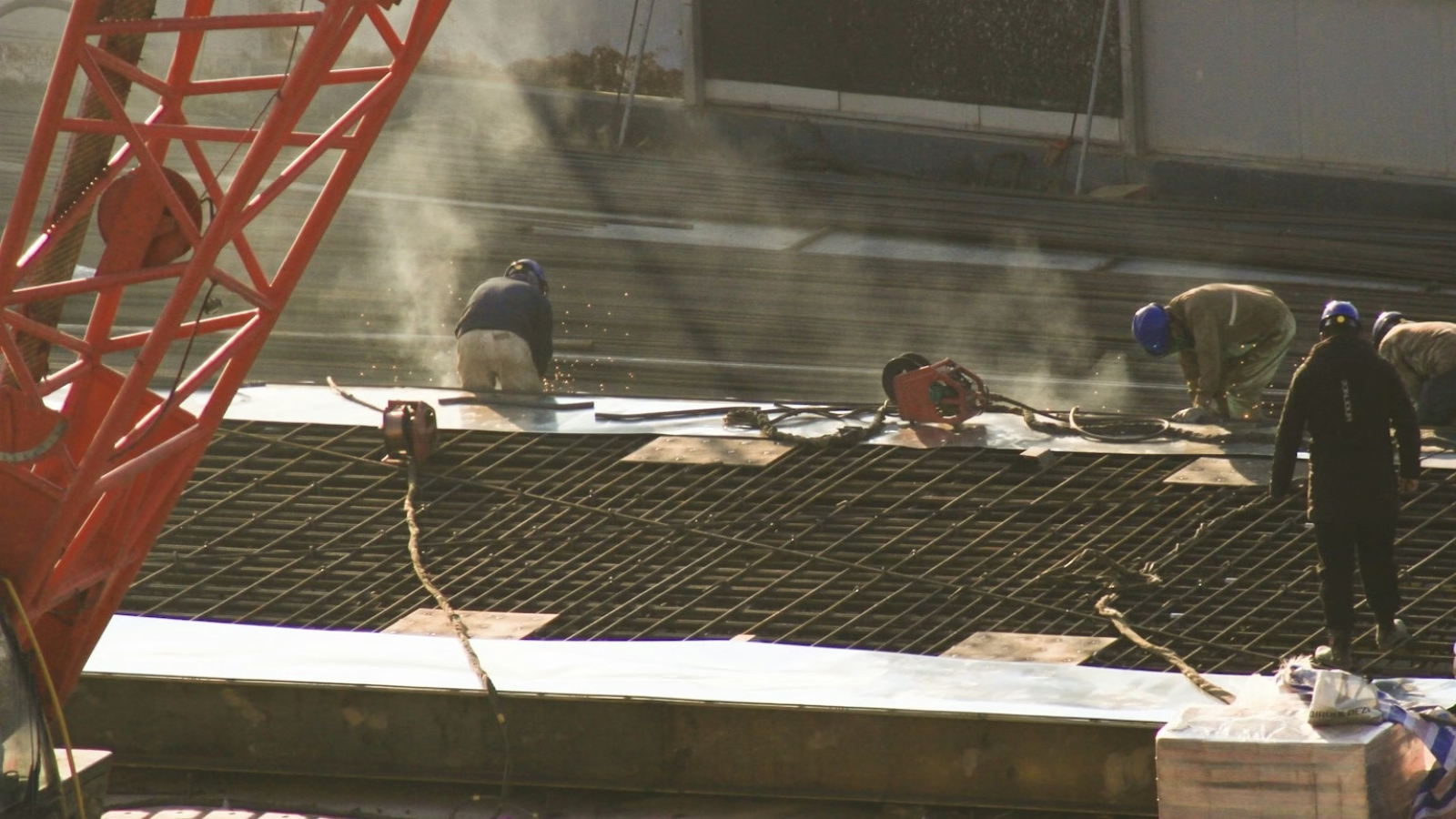
Look at the Atlanta skyline on any weekday and you will count cranes. Midtown high rises, mixed-use towers along the BeltLine, data centers, stadium and airport work, and road projects that never seem to end. All of it is built by people working at height, around heavy equipment and alongside crews employed by half a dozen different companies.
When one of those workers is badly hurt, the conversation almost always stops at four words: file for workers’ comp. For a lot of injured workers that is terrible advice, because it is only half the picture.
Workers’ compensation is the floor. On a multi-employer job site, it is very often not the ceiling.
Quick answer
Georgia workers’ compensation is an exclusive remedy against your own employer, so you generally cannot sue the company that hired you. It does not bar a claim against a negligent third party: another contractor, an equipment manufacturer, a property owner, a trucking company or a driver.
That distinction matters enormously. Workers’ compensation pays medical bills and a portion of wages but nothing for pain and suffering. A third-party claim can recover the full range of damages. Most seriously injured construction workers in Atlanta have both claims, and nobody tells them about the second one.
Construction Remains One of the Most Dangerous Ways to Earn a Living
This is not an impression. The U.S. Bureau of Labor Statistics counted 5,070 fatal work injuries nationwide in 2024. Construction and extraction occupations accounted for 1,032 of them. Falls, slips and trips alone killed 370 workers in those occupations, down from 400 the year before but still the defining hazard of the trade.
The Occupational Safety and Health Administration describes the industry the same way, listing falls from height, unguarded machinery, being struck by equipment, electrocution, silica and asbestos among the serious hazards workers face. An OSHA citation after your injury is not the same as a legal finding of liability, but it is powerful evidence, and it is public.
Who the Third Party Usually Is on an Atlanta Job Site
A modern construction project is a stack of separate companies. Your employer is one of them. Everyone else on that site is a potential defendant if their negligence injured you.
| Potential third party | Typical theory | What the case turns on |
|---|---|---|
| Another subcontractor | Created the hazard that hurt you: unguarded opening, falling material, live circuit, unsafe excavation | Site safety plans, daily logs, toolbox talk records, which trade controlled the area |
| Equipment or parts manufacturer | Product liability for a defective lift, saw, harness, ladder or scaffold component | The physical equipment, preserved and unaltered, plus maintenance and recall history |
| Property owner or developer | Premises liability for a dangerous condition the owner controlled | Who retained control over the site and whether the owner knew about the hazard |
| Crane, rigging or scaffold company | Negligent erection, inspection or operation by a separate specialty contractor | Inspection certificates, operator certification, rigging plans |
| Trucking company or driver | Delivery or haul truck strikes a worker, or a crash occurs in a work zone | ELD and black box data, dispatch records, see our truck accident practice |
| Engineer or architect | Negligent design, though Georgia extends comp immunity to certain construction design professionals | The contract scope and whether the immunity provision applies |
The Statutory Employer Trap
Here is the part that catches even experienced lawyers. Georgia does not limit workers’ compensation immunity to the company that signs your paycheck.
Under the statutory employer doctrine, a principal or general contractor who is liable to secure workers’ compensation benefits for a subcontractor’s employees under O.C.G.A. section 34-9-8 can also claim tort immunity, in some circumstances even where it did not actually pay the benefits. The Georgia Supreme Court applied that reasoning in Wright Associates v. Rieder, and later decisions have extended it to general contractors.
The practical consequence is that suing the general contractor is not automatic. The analysis depends on the contract chain, the project hierarchy and who genuinely carried coverage. It also cuts the other way: a contractor several steps removed from your employer, or one with no obligation to secure your benefits, may have no immunity at all. That determination should be made from the contract documents at the beginning of a case, not guessed at.
What Each Claim Actually Pays
The two systems compensate completely different things, which is why pursuing only one can leave a catastrophically injured worker short for life.
| Category of loss | Workers’ compensation | Third-party claim |
|---|---|---|
| Medical treatment | Authorized treatment, usually through a posted panel of physicians | Past and future medical care, including care comp will not authorize |
| Lost wages | A statutory portion of average weekly wage, subject to caps | Full lost earnings and lost future earning capacity |
| Pain and suffering | Not available | Available |
| Disfigurement and loss of enjoyment of life | Not available as such | Available |
| Spouse’s loss of consortium | Not available | Available |
| Punitive damages | Not available | Available where the conduct justifies it |
| Fault required | No, benefits are no-fault | Yes, negligence must be proven |
The Workers’ Compensation Lien, and the Rule That Limits It
When an injured worker recovers from a third party, the comp insurer will typically assert a subrogation lien under O.C.G.A. section 34-9-11.1 and claim reimbursement out of the settlement. Many workers are told this is automatic. It is not.
Georgia law conditions the lien on the injured worker having been fully and completely compensated for all of their economic and noneconomic losses. Where a recovery is limited by available insurance, or where the losses are severe enough that no settlement truly makes the worker whole, the lien can be reduced or defeated. Whether that argument gets made, and made well, often determines how much of a settlement the injured family actually keeps. Our guide on how personal injury settlements work in Georgia covers the mechanics of distribution.
Evidence on a Job Site Disappears Faster Than Almost Anywhere Else
A construction site is designed to change. By the time most injured workers call a lawyer, the scene that proves their case has been built over.
- The equipment itself. A defective lift or saw gets repaired, returned to a rental company or scrapped. Once it is altered, the product case is usually gone. A preservation letter has to go out immediately.
- Site conditions. The unguarded opening gets covered, the scaffold is struck, the excavation is backfilled. Photographs taken in the first days are irreplaceable.
- Daily logs, toolbox talks and safety meeting sign-ins. These establish who controlled the area and what hazards were known.
- Subcontracts and insurance certificates. These determine who is a statutory employer, who is a true third party and which policies are available.
- The OSHA investigation file. Useful, and obtainable, but it moves on its own timeline and is not a substitute for your own investigation.
- Witnesses. Crews rotate off projects and move between states. Names and phone numbers taken on day one are worth more than any document.
The Injuries These Cases Involve
Falls from height, crush injuries, electrocutions and struck-by events rarely produce minor harm. The construction cases our firm handles typically involve traumatic brain injuries, spinal cord injuries and paralysis, burn injuries from electrical contact or flash fire, amputations and other catastrophic injuries requiring lifetime care. When a worker is killed, the family may bring a wrongful death claim alongside the comp death benefit, and our guide on who can file a wrongful death claim in Georgia explains who holds that right.
If You Are Undocumented or Paid in Cash
Two things injured workers in Atlanta are regularly told, both wrong. First, that immigration status bars a claim. Georgia personal injury law does not condition the right to recover on immigration status. Second, that being paid in cash or issued a 1099 means there is no workers’ compensation. Georgia looks at the substance of the working relationship, not the label, and misclassified workers are frequently employees in fact. Conversations with our attorneys are confidential and protected by attorney-client privilege.
Frequently Asked Questions
If I am getting workers’ compensation, can I still sue?
You generally cannot sue your own employer, because Georgia workers’ compensation is an exclusive remedy under O.C.G.A. section 34-9-11. You can still sue a third party whose negligence hurt you, such as another contractor on the site, an equipment manufacturer, a property owner or a delivery driver. That third-party case is separate from the comp claim and is not limited to the comp benefit schedule.
What is the difference between workers’ compensation and a third-party claim?
Workers’ compensation pays authorized medical treatment and a portion of lost wages regardless of fault, but it does not pay for pain and suffering. A third-party claim requires proof that someone else was negligent, and it can recover the full range of damages including pain and suffering, loss of earning capacity and, in fatal cases, the full value of the life of the deceased.
Can I sue the general contractor on my job site?
Sometimes, but not always. Georgia’s statutory employer doctrine can extend workers’ compensation immunity to a principal or general contractor who is liable to secure benefits for a subcontractor’s employees. Whether a particular contractor is immune depends on the contract structure and who actually carried coverage, so the project hierarchy has to be examined before any claim is filed.
Does the workers’ compensation insurer get paid back out of my settlement?
It may assert a subrogation lien under O.C.G.A. section 34-9-11.1. Georgia law limits that lien: the insurer recovers only where the injured worker has been fully and completely compensated for all of their losses. That limitation is frequently the difference between a settlement that helps a family and one that does not, and it needs to be litigated rather than assumed.
What if I am paid in cash or treated as a 1099 contractor?
Labels on a paycheck do not control. Georgia looks at the actual working relationship, and a worker misclassified as an independent contractor may still be an employee for workers’ compensation purposes. Separately, a third-party negligence claim does not depend on employment status at all.
How long do I have to bring a construction injury claim in Georgia?
A workers’ compensation claim has its own filing deadlines with the State Board of Workers’ Compensation, and a third-party injury or wrongful death lawsuit generally must be filed within two years. If a government entity owned or controlled the project, a much shorter ante litem notice deadline also applies.
Related Reading
- Atlanta Construction Accident Lawyers
- Workplace Accident Lawyers
- What Compensation Can You Claim After a Personal Injury in Georgia?
- How Long Do You Have to File a Personal Injury Claim in Georgia?
- Suing the City of Atlanta After an Injury: The Six Month Deadline
- Case Results and Trial Experience
Talk to an Atlanta Construction Injury Lawyer Before You Sign Anything
Thomas Kennedy Sampson & Tompkins LLP has tried serious injury cases in Georgia for more than 50 years, serving injured workers and their families across Fulton, DeKalb, Clayton, Cobb and Gwinnett counties. If you were hurt on a job site, we will look at the whole project, not just your paycheck, and tell you honestly whether a third-party claim exists.
Call (404) 688-4503 or request a free consultation. There is no fee unless we recover for you.
Sources and References
- U.S. Bureau of Labor Statistics, Census of Fatal Occupational Injuries summary for 2024: bls.gov
- U.S. Bureau of Labor Statistics, CFOI current and revised data tables: bls.gov
- Occupational Safety and Health Administration, construction industry hazards and standards: osha.gov
- Georgia State Board of Workers’ Compensation, the agency that administers Georgia workers’ compensation claims: sbwc.georgia.gov
- Justia, published text of Georgia’s apportionment statute O.C.G.A. section 51-12-33: law.justia.com
This article is general information about Georgia law and is not legal advice. Workers’ compensation immunity and statutory employer questions are highly fact specific. Reading this page does not create an attorney-client relationship.

Add a Comment