car_accidents_lawyer

When to Hire a Car Accident Lawyer After a Minor Crash

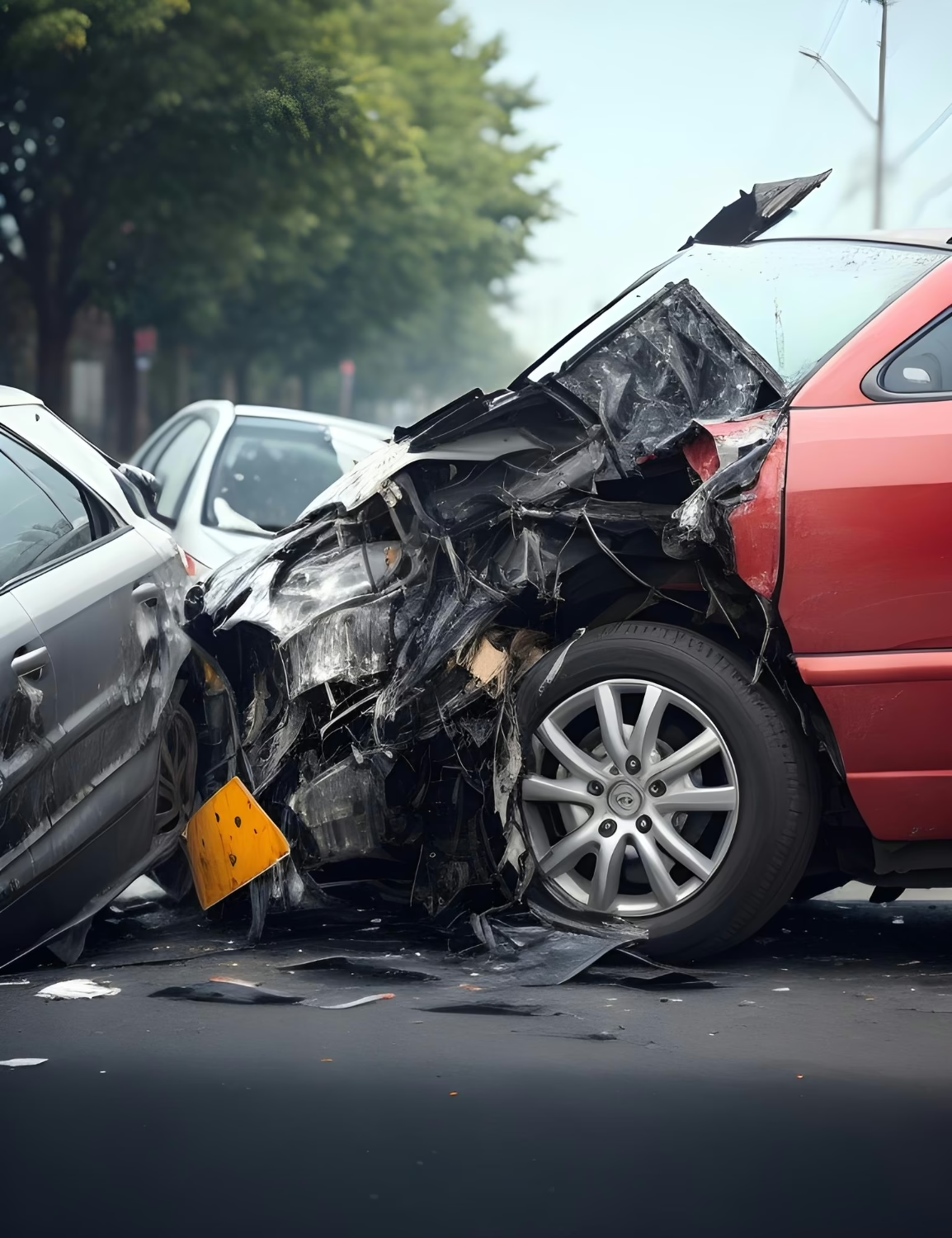
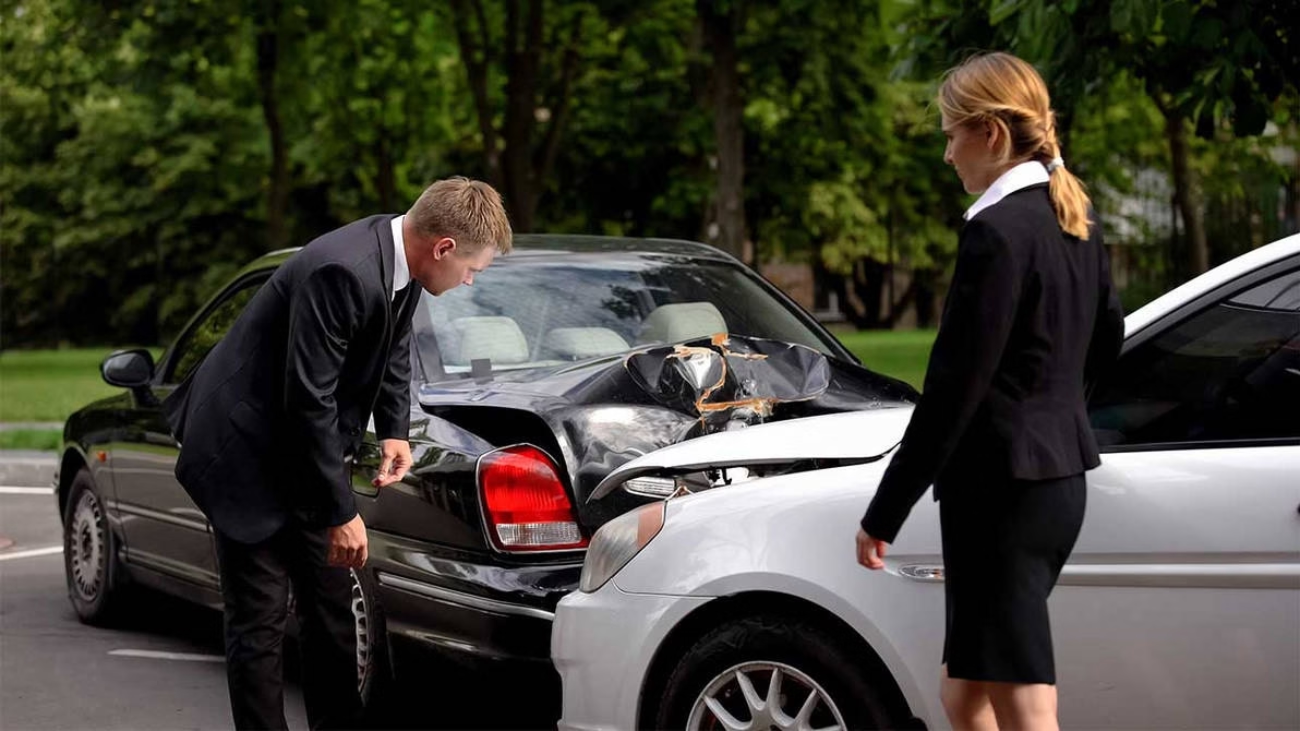
Even a minor car accident can turn your day — or your life — upside down. A small dent or a little soreness might not seem serious at first, but the aftermath of a crash can become more complicated than most people expect.
From delayed injuries to insurance disputes, it’s often difficult to know when to hire a lawyer in Georgia after a seemingly minor accident.

At Thomas Kennedy Sampson & Tompkins LLP, our experienced car accident attorneys in Atlanta have seen firsthand how “minor” collisions can lead to major financial and legal challenges. Here’s what you should know before deciding whether to call a lawyer.

1. Why Minor Accidents Can Still Have Major Consequences

Not all car accident injuries show up immediately. In many cases, victims walk away from a collision thinking they’re fine — only to experience pain days or weeks later.
Common delayed injuries include:

  • Whiplash or neck strain
  • Back or spinal injuries
  • Concussions and head trauma
  • Internal bleeding or soft tissue damage

If left untreated, these injuries can worsen and create lasting health problems. Seeking medical attention early helps protect both your well-being and your legal rights.

Even small crashes can also lead to unexpected vehicle repair costs, lost workdays, or emotional distress — all of which can be part of a compensation claim.

2. When You Should Hire a Car Accident Lawyer in Georgia

You might not need a lawyer for every fender-bender. However, there are certain signs that mean you should contact an attorney right away.

a. You Were Injured — Even Slightly

If you experience any pain, stiffness, or dizziness after the crash, it’s important to seek medical attention and then speak with a lawyer.
An attorney can help connect your injury to the accident, ensuring your medical bills and future treatment costs are covered.

b. The Other Driver Was Clearly at Fault

Even if liability seems obvious, insurance companies may still try to shift blame or minimize payouts. A lawyer can collect evidence such as photos, witness statements, and police reports to prove negligence.

c. The Insurance Company Offers a Low Settlement

Insurers often make quick offers that cover only surface-level costs. A car accident attorney in Atlanta can calculate your true damages, including lost income and long-term care needs, and negotiate for a fair settlement.

d. There’s a Dispute About Who Caused the Accident

If the other driver or insurer challenges your version of events, you need an advocate. Georgia follows a comparative negligence rule, meaning your compensation can be reduced if you’re found partially at fault.
A lawyer ensures your side of the story is supported by strong evidence.

e. You’re Dealing with Uninsured or Underinsured Drivers

Unfortunately, not every Georgia driver carries enough insurance. An attorney can help you navigate your uninsured motorist coverage and recover compensation through other legal options.

3. Why It’s Important to Act Quickly

Time is critical after any accident.
In Georgia, the statute of limitations for filing a personal injury claim is typically two years from the date of the crash. But waiting too long can make it harder to gather evidence, locate witnesses, or prove your injuries were caused by the collision.

The sooner you involve a lawyer, the stronger your case will be.

4. How an Atlanta Car Accident Attorney Can Help

Hiring a lawyer doesn’t always mean going to court — it means having an experienced professional protect your interests while you recover.
Here’s what your attorney can do for you:

  • Handle all communication with insurance adjusters
  • Gather and preserve key evidence
  • Coordinate with medical experts to document injuries
  • Calculate full financial damages (medical bills, repairs, lost wages, pain & suffering)
  • Negotiate settlements or file a lawsuit if necessary

At Thomas Kennedy Sampson & Tompkins LLP, our Atlanta-based attorneys are skilled negotiators and trial lawyers who understand how to get results — whether through settlement or litigation.

5. Common Mistakes to Avoid After a Minor Accident

Even small errors can weaken your case or reduce your compensation. Avoid the following:

  • Admitting fault at the scene
  • Failing to get a medical checkup
  • Delaying legal consultation
  • Accepting the first settlement offer
  • Posting about the crash on social media

Taking early, informed action with the help of a lawyer ensures that your rights remain protected.

6. Why Choose Thomas Kennedy Sampson & Tompkins LLP

For decades, Thomas Kennedy Sampson & Tompkins LLP has represented injured individuals and families across Atlanta and Georgia. We understand how to turn complex legal challenges into strong, evidence-based cases.

Our firm offers:

  • Free, no-obligation consultations
  • No upfront fees — you pay nothing unless we win
  • Personalized attention from experienced trial lawyers
  • Proven success in car accident and personal injury claims

Even if your crash seemed minor, you deserve peace of mind and professional guidance. Let our team evaluate your case and help you move forward confidently.

7. Take the First Step Toward Recovery

If you’ve been in a minor car accident in Atlanta, don’t assume the issue will resolve itself. Injuries can worsen, insurance claims can stall, and evidence can disappear.
A quick call to an experienced car accident attorney in Atlanta could make all the difference in your recovery and financial future.

Contact Thomas Kennedy Sampson & Tompkins LLP today to schedule a free consultation and learn your rights. We’re here to help you secure the justice and compensation you deserve.
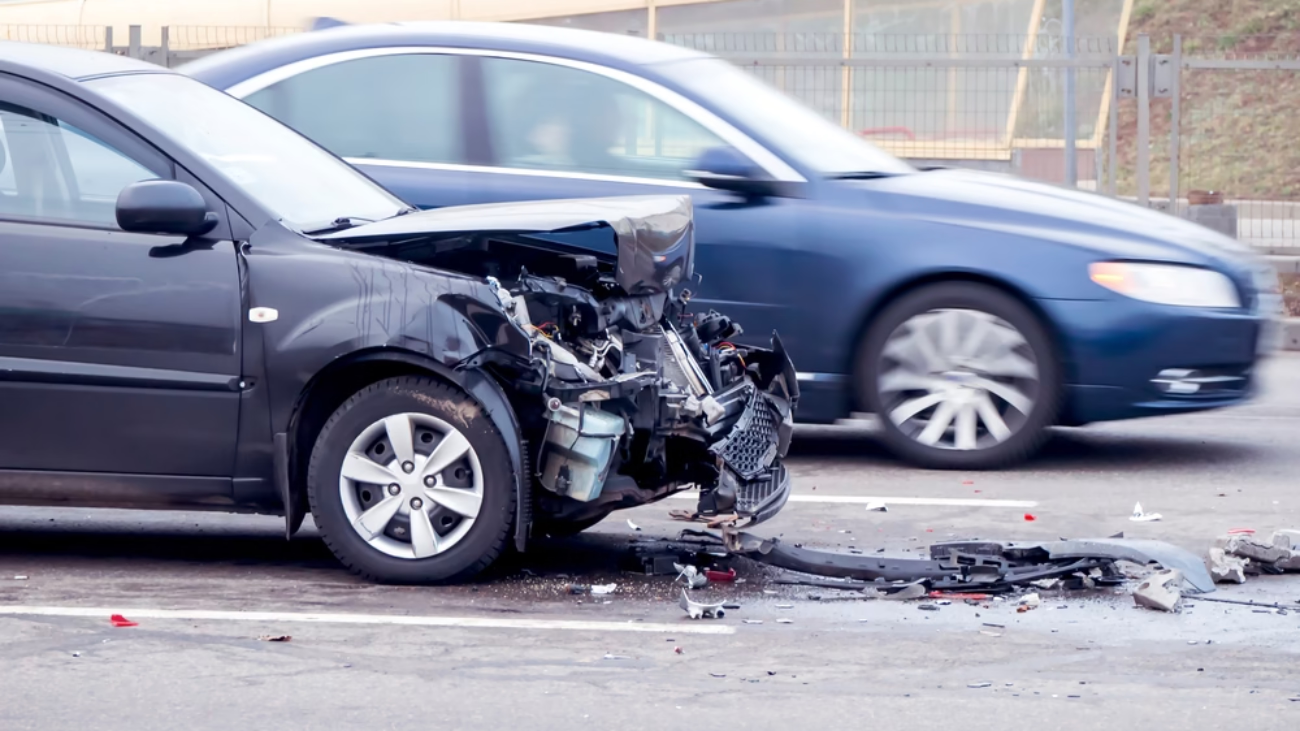
Side,View.,Front,Of,Dark,Color,Car,Damaged,And,Broken

What to Do Immediately After a Car Accident in Atlanta, GA

A car accident can happen in seconds — but the consequences can last a lifetime. Whether it’s a minor fender-bender on Peachtree Street or a serious collision on I-75, the moments right after a crash are confusing and stressful.
Knowing what to do next can protect not only your safety but also your right to fair compensation.

At Thomas Kennedy Sampson & Tompkins LLP, we’ve helped countless clients navigate this difficult time. Here’s a step-by-step guide on what you should do immediately after a car accident in Atlanta, Georgia.

1. Check for Injuries and Call 911

Your safety and the safety of others come first.
If anyone is injured, call 911 immediately to get medical and police assistance on the scene. Even if injuries appear minor, it’s important to have emergency services respond. Some injuries — like whiplash, concussions, or internal trauma — may not be immediately obvious.

In Georgia, drivers are legally required to report accidents that result in injury, death, or property damage exceeding $500. Failing to do so could result in penalties or loss of your right to compensation later.

2. Stay at the Scene and Avoid Admitting Fault

Never leave the scene of an accident until law enforcement gives you permission to go. Leaving too soon could be considered a hit-and-run, which is a criminal offense in Georgia.
While speaking to the other driver or the police, stick to the facts. Avoid saying “I’m sorry” or admitting fault — even casually. Fault will be determined after a full investigation based on the evidence collected.

Remember, Georgia follows a comparative negligence rule, meaning your compensation can be reduced if you’re found partially at fault.

3. Gather Evidence at the Scene

If it’s safe to do so, collect as much information as possible before leaving the scene.
Take clear photos of:

  • Vehicle damage
  • Road conditions and traffic signs
  • Skid marks or debris
  • Visible injuries

Exchange information with the other driver, including:

  • Full name and contact details
  • Driver’s license number
  • License plate number
  • Insurance information

If there are witnesses, politely ask for their names and contact information — witness statements can be critical in proving fault later.

4. Seek Medical Attention Immediately

Even if you feel fine, you should always get checked by a doctor as soon as possible.
Many accident-related injuries — such as soft-tissue damage or brain trauma — take hours or days to show symptoms. Seeing a healthcare professional creates a medical record that links your injuries directly to the accident, which is essential for any insurance or legal claim.

Delaying medical treatment could give insurers a reason to deny or reduce your claim.

5. Report the Accident to the Police and Your Insurance Company

When police arrive, provide accurate information and request a copy of the Georgia Uniform Motor Vehicle Accident Report. This report will serve as key evidence for your claim.

Notify your insurance company promptly, but don’t provide a recorded statement or accept blame. Insurers often aim to minimize payouts — it’s best to let your Atlanta car accident lawyer handle those communications.

6. Contact an Experienced Car Accident Lawyer in Atlanta

After ensuring everyone’s safety and getting medical care, your next call should be to a car accident lawyer in Atlanta.
An experienced attorney can:

  • Handle all communication with insurance companies
  • Gather and preserve critical evidence
  • Evaluate the full value of your claim
  • Negotiate for a fair settlement
  • File a lawsuit if necessary to pursue maximum compensation

At Thomas Kennedy Sampson & Tompkins LLP, our experienced trial lawyers have been helping accident victims in Atlanta and across Georgia for decades. We understand how to build strong cases that hold negligent drivers and corporations accountable.

7. What Not to Do After a Car Accident

In the aftermath of a crash, even small mistakes can harm your case. Avoid these common missteps:

  • Don’t post details or photos about the accident on social media.
  • Don’t accept a quick settlement before understanding your total damages.
  • Don’t delay medical treatment — gaps in care can weaken your claim.
  • Don’t assume the insurance company is on your side.

Having an attorney early on can help you avoid these pitfalls and protect your right to fair compensation.

8. Why Choose Thomas Kennedy Sampson & Tompkins LLP

When you’ve been injured in a car accident, you need a law firm that combines experience, compassion, and results.
Thomas Kennedy Sampson & Tompkins LLP has earned a reputation as one of Atlanta’s most respected personal injury law firms. We have successfully represented clients in complex auto accident cases, securing millions in compensation for medical expenses, lost wages, and pain and suffering.

Our promise to you:

  • No upfront fees — you pay nothing unless we win your case.
  • Personalized attention from start to finish.
  • A dedicated team committed to fighting for your best outcome.

9. Take Action Today

If you’ve been injured in a car accident in Atlanta, don’t wait to get legal help.
Evidence can disappear, witnesses can forget details, and insurance companies move fast to protect their interests. You deserve someone who will move faster to protect yours.

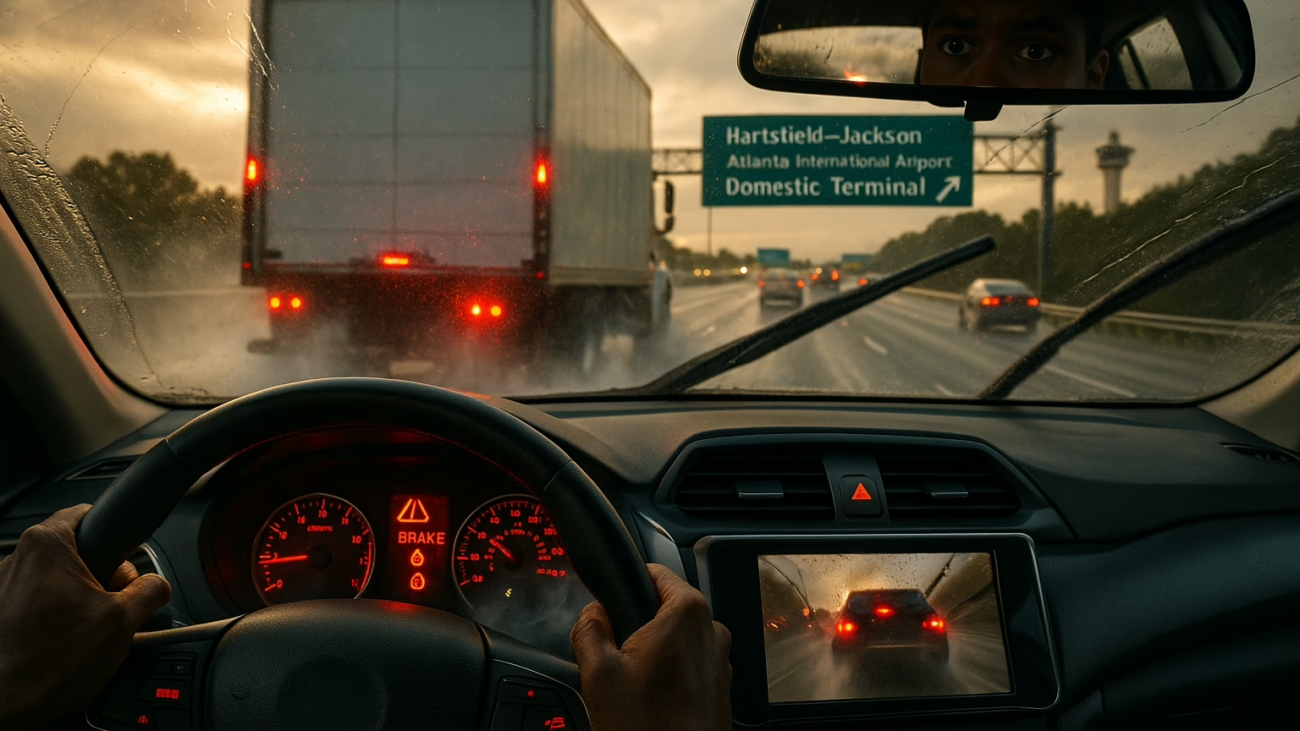
Driver’s POV moments before a crash near the Hartsfield–Jackson Atlanta International Airport Domestic Terminal exit sign.

Car Accidents Around Hartsfield–JacksonAtlanta International Airport (ATL)

If you’ve ever driven to Hartsfield–Jackson Atlanta International Airport (ATL), you know the “airport corridor” is its own ecosystem—rental cars and rideshares weaving through locals, hotel shuttles, delivery trucks, and out-of-towners darting between terminals. That mix, plus tight timelines and lane changes for multiple exits, makes crashes near Hartsfield–Jackson more common than anyone would like.

This guide explains where airport-area wrecks tend to happen, exactly what to do if you’re hit on the way to a flight, who may be responsible, and how TKST Law can protect your claim—especially when you’re trying to catch a plane.

Serving injured people from our College Park office:
 TKST Law3355 Main Street, Atlanta, Georgia 30337

Why the “Hartsfield–Jackson Corridor” Sees So Many Crashes

The road network around Hartsfield–Jackson funnels enormous traffic through a few critical connectors. The airport is ringed by I-75, I-85, I-285, and I-20, with primary terminal access from Camp Creek Parkway (SR 6 / “Tuskegee Airmen Parkway”), Riverdale Road (SR 139), and the I-75 exit for the International Terminal. Together, these roads create quick merges, short weaves, and congestion spikes—especially during morning and evening flight banks and large convention weeks.

Common Hot Spots Near Hartsfield–Jackson (ATL)

  • Camp Creek Parkway (SR 6) between I-285 and I-85 (Domestic Terminal, rental car & hotel corridors). Heavy shuttle and rideshare activity with multiple on/off ramps in short succession.
  • Riverdale Road (SR 139) near I-285 and the airport perimeter—frequent stop-and-go and turning traffic.
  • I-85 Exits 71–72 (Riverdale Rd / Camp Creek Pkwy), I-285 Exit 2 (Camp Creek Pkwy), and I-75 Exit 239 (International Terminal)—all high-merge areas with lane changes under time pressure.
  • Old National Highway (SR 279) northbound toward I-285—local traffic crossing to airport shuttles and US-29.

Best Road, Sullivan Road, Virginia Avenue, and US-29/Roosevelt Highway—hotel clusters, park-n-ride lots, and quick signal timing make for sudden stops.

What to Do Immediately After a Crash on the Way to Hartsfield–Jackson

When you’re minutes from bag drop or security, instincts tell you to keep moving. Don’t. Protect your safety and your rights first. Here’s the exact playbook:

  1. Check for injuries and call 911. Report the crash. In Georgia, you should notify police if anyone is hurt or if there is significant property damage.
  2. Move vehicles out of travel lanes if possible (“Steer It, Clear It”). If vehicles are drivable and there are no serious injuries, Georgia expects you to clear the roadway to a safe shoulder or nearby lot to prevent secondary crashes.
  3. Use hazards and stay visible. When emergency or HERO units are on scene, Georgia’s “Move Over” rules require approaching drivers to change lanes away or slow significantly. Expect others to be moving over—keep your distance.
  4. Exchange information and document everything. Get driver’s license and insurance details, plate numbers, and the exact location (ramp number, exit, or intersection). Photograph vehicle positions, damage, debris, skid marks, traffic signals/signs, and nearby businesses or cameras.
  5. Identify commercial parties. If a crash involves a rideshare, shuttle, hotel van, delivery truck, or rental car, note the company, vehicle number, and any trip/contract details displayed in the app or on paperwork.
  6. Talk to witnesses now. Out-of-town witnesses vanish quickly in an airport area. Ask for names and mobile numbers while people are still nearby.
  7. Get the case/card number. Ask the responding officer for the report number and the agency (College Park PD, Atlanta PD, Hapeville PD, Clayton County PD, or Georgia State Patrol), so your lawyer can pull the full report later.
  8. Medical check within 24 hours. Concussions and soft-tissue injuries often show up after adrenaline fades. A same-day or next-day exam also strengthens your injury documentation.
  9. Call TKST Law before you call any insurer. Insurers move fast—especially when rental cars or corporate fleets are involved. We preserve evidence and protect your statement from being used against you.

Should I still try to catch my flight?
 If vehicles are drivable and officers give the all-clear, you can make a new flight—but not before exchanging info and ensuring a report is made. Leaving without exchanging information or reporting could turn a bad day into a legal problem.

Fault and Insurance Nuances Unique to the Hartsfield–Jackson Area

Crashes near Hartsfield–Jackson often involve one or more commercial parties, which changes the insurance landscape:

  • Rideshare (Uber/Lyft): Coverage depends on the driver’s app status (off-app, waiting, or on a trip). On-trip limits are typically much higher than personal policies.
  • Hotel and airport shuttles: Commercial carriers may have layered policies and strict internal incident procedures.
  • Rental cars: The at-fault driver’s personal policy typically applies; the rental company may have supplemental liability or a damage waiver, but that rarely protects you.
  • Delivery vehicles & contractors: Corporate policies, contractor agreements, and federal safety rules can all matter; securing maintenance logs and telematics early is key.

Multi-jurisdiction sites: Parts of the Hartsfield–Jackson footprint sit in both Fulton and Clayton counties and within multiple city limits (Atlanta, College Park, Hapeville). That can affect which agency investigates and where a lawsuit is filed.

Legal Basics After an Atlanta-Area Car Accident

  • Report the crash: If anyone is injured or there’s meaningful property damage, call 911 and get a report.

  • Move and clear when safe: Georgia encourages drivers to move drivable vehicles out of travel lanes to reduce secondary collisions.

  • “Move Over” around responders: When approaching emergency, utility, DOT, or tow vehicles on the shoulder with flashing lights, drivers should change lanes away if possible, or slow below the limit and be prepared to stop.

  • Statute of limitations: In many Georgia car-injury cases, you generally have two years from the date of the crash (or when the claim accrues) to file a personal-injury lawsuit. Different rules can apply to claims against government entities or for loss of consortium. Don’t wait—evidence around the airport disappears fast.

(This article is general information, not legal advice. For advice on your situation, contact an attorney.)

If You Missed Your Flight Because of the Crash

  1. Get your police/incident number for the airline or travel-insurance claim.

  2. Document out-of-pocket costs (rebooking fees, hotel, meals, rides).

  3. Ask an adjuster before you pay large rebooking costs—some policies reimburse, others pay directly.

  4. Keep receipts and the boarding pass/itinerary you missed; this helps TKST and insurers verify causation.

If you’re a business traveler, document the lost meeting or event (emails, calendar invites) to support damages

Evidence That Makes or Breaks Hartsfield–Jackson Claims

  • Dash-cam and telematics: Rideshare and fleet vehicles often have cameras and GPS. We send preservation letters quickly to prevent overwrites.

  • Surveillance video: Hotel entrances, gas stations, and park-n-ride lots along Camp Creek, Riverdale Rd, Old National Hwy, Best Rd, and Virginia Ave are frequent sources of video.

  • Intersections and ramp cameras: Some footage is retained briefly; asking within days matters.

  • Cell-phone records: For suspected distraction, we can subpoena records to establish phone use at impact.

  • Vehicle data: Airbag control modules and advanced driver-assistance logs can establish speed and braking.

How TKST Law Helps After a Crash Near Hartsfield–Jackson

From our College Park office—3355 Main Street, Atlanta, GA 30337—we’re minutes from the crash locations we investigate most. We:

  • Secure police reports across jurisdictions (College Park, Atlanta, Hapeville, Clayton County, GSP).
  • Preserve video and telematics from shuttles, rideshare, and corporate fleets.
  • Coordinate rental car, medical care, and property-damage
  • Calculate lost-trip and lost-business damages if travel was interrupted.

Negotiate with layered commercial policies and litigate when needed.


Checklist: Hit on the Way to Hartsfield–Jackson? (Print or Save)

  • 911 called; everyone safe; vehicles moved off lanes when possible.
  • Police agency + report number noted (College Park PD, Atlanta PD, Hapeville PD, Clayton County PD, or GSP).
  • Photos of plates, damage, intersection/ramp signs, skid marks, weather, and nearby businesses/cameras.
  • Witness names and mobile numbers.
  • Commercial details captured (rideshare app status, shuttle name, unit or USDOT number).
  • Same-day/next-day medical exam scheduled.
  • TKST Law called before giving a recorded statement.

Receipts saved for flight changes, hotels, meals, rides.

Checklist: Hit on the Way to Hartsfield–Jackson? (Print or Save)

The heaviest clusters tend to be around I-285 Exit 2 (Camp Creek Pkwy), I-85 Exits 71–72 (Riverdale Rd/Camp Creek Pkwy), the I-75 International Terminal exit (239), and surface routes like Camp Creek Pkwy (SR 6), Riverdale Rd (SR 139), Old National Hwy (SR 279), Best Rd, Sullivan Rd, Virginia Ave, and US-29/Roosevelt Hwy. These are high-merge or high-turnover areas serving terminals, hotels, and car facilities.

If anyone is hurt or there’s notable damage, yes—report it and exchange information before leaving. Officers can often move things efficiently, but leaving prematurely can harm your case and risk legal trouble.

If no one is seriously hurt and cars are drivable, Georgia expects drivers to move vehicles out of the travel lanes to reduce the chance of a secondary crash. Pull to a safe shoulder or nearby lot and finish the exchange there.

Georgia’s “Move Over” rules require drivers approaching stationary emergency/utility/tow vehicles with flashing lights to change lanes away if possible, or slow below the limit and be prepared to stop.

Many Georgia car-injury lawsuits must be filed within two years of the crash (or when the claim accrues). Some claims have different timelines—talk to a lawyer early to avoid missing deadlines.

Usually. Commercial and rideshare policies can carry higher limits and stricter evidence rules (telematics, stored video). We act quickly to preserve that data before it’s overwritten.

Georgia law governs the crash if it happened here, but your home-state health insurance and credit card rental benefits may still help. Bring all policy documents to your consultation.

Even low-speed collisions can become complicated in the airport corridor due to multi-party insurance (rental, rideshare, corporate fleets), jurisdictional questions, and lost-trip damages. A quick consult can prevent costly mistakes