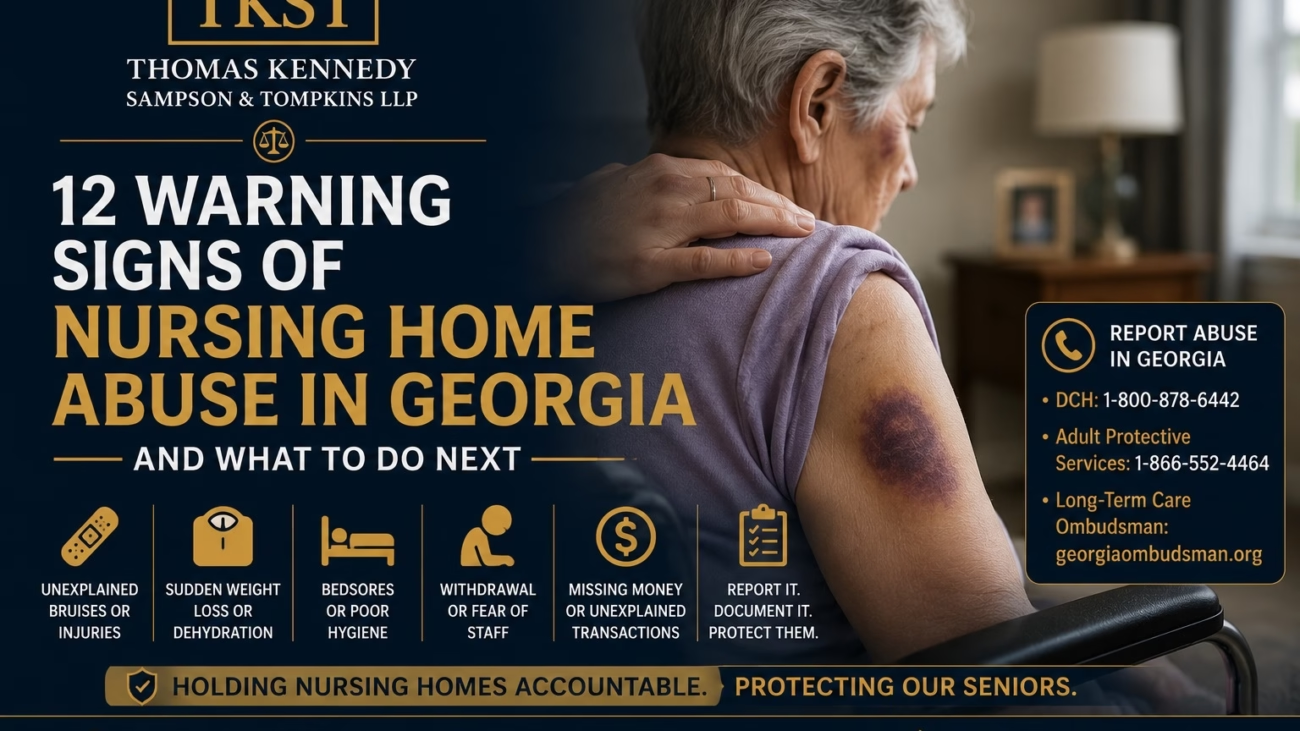
The most common warning signs of nursing home abuse are unexplained injuries (bruises, fractures, burns), sudden weight loss or dehydration, poor hygiene, bedsores, emotional withdrawal or fearfulness around staff, and unexplained financial transactions. If you see these signs in Georgia, report them to the Department of Community Health at 1-800-878-6442 and document everything.
Families are usually the first — and sometimes the only — line of defense for a nursing home resident. Abuse and neglect are chronically underreported because residents may be unable to communicate, afraid of retaliation, or ashamed. Here are the signs to watch for, grouped by the type of mistreatment they suggest.
Signs of Physical Abuse
1. Unexplained bruises, cuts, or burns — especially in patterns (grip marks on arms, marks from restraints on wrists or ankles)
2. Fractures or repeated “falls” with vague or shifting explanations
3. Staff refusing to leave you alone with your loved one during visits
Signs of Neglect
4. Sudden weight loss, malnutrition, or dehydration — often the first visible sign that basic care isn’t happening
5. Bedsores (pressure ulcers) — advanced-stage bedsores are almost always preventable with proper repositioning and are a red flag for systemic neglect
7. Medication errors — missed doses, oversedation, or a resident who seems unusually drowsy or “zoned out”
8. Untreated medical conditions or infections that were reported but never addressed
Signs of Emotional Abuse
9. Withdrawal, depression, or unusual silence, especially in a previously social person
10. Fearfulness, flinching, or anxiety around specific staff members
Signs of Financial Exploitation
11. Unexplained withdrawals, missing belongings, or new “arrangements” — changed wills, added account signers, unpaid bills despite adequate funds
12. Pressure to sign documents the resident doesn’t understand
How to Report Nursing Home Abuse in Georgia
If your loved one is in immediate danger, call 911 first. Otherwise, Georgia gives you three official channels:
Where to report
Contact
When to use it
DCH Healthcare Facility Regulation
1-800-878-6442
Licensed nursing homes and long-term care facilities
Adult Protective Services (DHS)
1-866-552-4464
Abuse of adults 65+ or disabled adults, including outside facilities
Long-Term Care Ombudsman
georgiaombudsman.org
Resident advocacy; complaints can remain anonymous
Georgia law also makes many professionals — doctors, nurses, facility staff — mandatory reporters, meaning they are legally required to report suspected abuse. A facility that ignored internal reports may face additional liability.
Document as you go: photograph injuries and living conditions, keep a dated journal of visits and conversations, save financial statements, and request your loved one’s complete medical chart in writing.
When Abuse Becomes a Legal Claim
Reporting protects your loved one. A civil claim holds the facility financially accountable — and is often the only thing that changes corporate behavior. Depending on the facts, a claim may involve:
– Negligence — understaffing, inadequate training, failure to supervise
– Medical malpractice — when negligent clinical care (medication errors, untreated infections, unmonitored conditions) causes harm; see our medical malpractice practice page for how these claims work
– Wrongful death — when neglect or abuse contributes to a resident’s death, the family may bring a claim under Georgia’s wrongful death statute
Safety comes first — but if you can, consult an attorney before the move. Transferring facilities can make evidence (staff schedules, chart records, surveillance) harder to preserve. An attorney can send preservation letters the same week.
Talk to an Atlanta Nursing Home Abuse Attorney
Thomas Kennedy Sampson & Tompkins LLP — Georgia’s oldest Black-owned law firm — represents families across metro Atlanta and Georgia in nursing home abuse and neglect cases. Our Atlanta nursing home abuse lawyers can investigate, preserve evidence, and pursue every responsible party. Contact us for a free consultation or call (404) 688-4503.
FAQ
What are the first signs of nursing home neglect?
Sudden weight loss, dehydration, poor hygiene, and bedsores are usually the earliest visible signs. Advanced bedsores in particular almost never occur with proper care.
How do I report nursing home abuse in Georgia?
Call the Department of Community Health, Healthcare Facility Regulation at 1-800-878-6442 for licensed facilities, or Adult Protective Services at 1-866-552-4464. In emergencies, call 911. The Long-Term Care Ombudsman also accepts anonymous complaints.
Can I sue a nursing home in Georgia?
Yes. Facilities can be held liable for negligence, medical malpractice, and wrongful death. Claims generally must be filed within two years, and malpractice claims require an expert affidavit.
Can a nursing home retaliate against my loved one for a complaint?
Retaliation is illegal. Anonymous complaints through the Long-Term Care Ombudsman are one option for families who fear retaliation while the resident remains in the facility.
What compensation is available in a nursing home abuse case?
Medical costs, relocation expenses, pain and suffering, and — in death cases — the full value of the resident’s life under Georgia’s wrongful death law. Punitive damages may be available for egregious conduct.
Yes. Under O.C.G.A. § 51-3-1, Georgia stores owe customers a duty of ordinary care to keep their premises safe. You can sue if you prove the store knew — or should have known — about the hazard that caused your fall, and that you did not have equal knowledge of it.
But winning is harder than most people expect. Georgia’s “superior knowledge” doctrine, its 50% comparative fault bar, and the 2025 tort reform law (SB 68) all shape whether a store fall becomes a valid claim. Here is how these cases actually work.
What Duty Does a Georgia Store Owe You?
When a business invites the public in, Georgia law classifies customers as invitees — the highest level of legal protection. The store must exercise ordinary care to keep its premises and approaches safe, which includes:
– Reasonable inspection procedures to find spills and hazards
– Prompt cleanup or warning (wet floor signs, barriers)
– Maintaining flooring, lighting, stairs, and parking areas
– Training staff to identify and respond to dangers
This duty covers the “approaches” too — sidewalks, entryways, and parking lots the store controls.
The Key Battleground: Superior Knowledge
Georgia slip and fall cases usually turn on one question: who knew about the hazard? You must show the store had superior knowledge — meaning it knew or should have known about the danger, and you did not.
Store knowledge comes in two forms:
– Actual knowledge: an employee saw the spill, or caused it.
– Constructive knowledge: the hazard existed long enough that a reasonable inspection would have found it, or an employee was close enough to see and fix it.
This is why evidence disappears fast in these cases. Surveillance footage is often overwritten within days, and sweep logs and incident reports stay in the store’s hands. The steps you take immediately after a fall — photos, witness names, an incident report, prompt medical care — mirror the advice in our guide on what to do immediately after a car accident in Atlanta: document everything before it vanishes.
What the Store’s Insurance Company Will Argue
Expect some version of these defenses:
1. “It was open and obvious.” If you could have seen the hazard by looking, the store argues you had equal knowledge.
2. “You weren’t watching where you were going.” Georgia’s modified comparative fault rule reduces your recovery by your percentage of fault — and if you’re found 50% or more at fault, you recover nothing.
3. “We had no notice.” The store claims the spill happened moments before your fall, so no inspection would have caught it.
An experienced slip and fall lawyer counters these with inspection records, video preservation letters, and witness testimony.
How SB 68 Changed Slip and Fall Cases in 2025
Georgia’s tort reform law, signed in April 2025, did not rewrite the duty stores owe — but it changed how these cases are litigated and valued:
– Medical damages are now limited to amounts actually paid or reasonably expected to be paid, not the inflated “sticker price” of medical bills.
– Defendants can demand bifurcated trials, splitting the question of fault from the question of damages.
– New limits on how attorneys can argue pain-and-suffering values to juries (so-called “anchoring” restrictions).
Georgia gives you two years from the date of the fall to file suit (O.C.G.A. § 9-3-33). If you fell on government property — a city sidewalk, a county building — ante litem notice deadlines can be as short as six months. Waiting also means losing video evidence, so the practical deadline is much shorter than the legal one.
Injured in a Store? Talk to Us First
Thomas Kennedy Sampson & Tompkins LLP has held Georgia property owners accountable for decades. Whether your fall happened in a grocery store, big-box retailer, restaurant, or apartment common area, our premises liability attorneys can preserve the evidence and build your claim. Contact us for a free consultation or call (404) 688-4503.
FAQ
Can you sue a store if you slip and fall in Georgia?
Yes. Stores owe customers a duty of ordinary care under O.C.G.A. § 51-3-1. You must prove the store had superior knowledge of the hazard — it knew or should have known, and you did not.
What do I have to prove in a Georgia slip and fall case?
That a hazardous condition existed, the store had actual or constructive knowledge of it, you lacked equal knowledge, and the hazard caused your injuries.
How long do I have to file a slip and fall lawsuit in Georgia?
Two years from the date of the fall. Claims involving government property may require formal notice within six to twelve months.
What if the store says the fall was my fault?
Georgia’s modified comparative fault rule reduces your recovery by your percentage of fault. If you are 50% or more at fault, you recover nothing — so pushing back on fault arguments is critical.
Did Georgia’s SB 68 tort reform end slip and fall lawsuits?
No. The duty stores owe customers is unchanged. SB 68 changed how damages are calculated (medical bills actually paid), allowed bifurcated trials, and limited pain-and-suffering anchoring arguments.
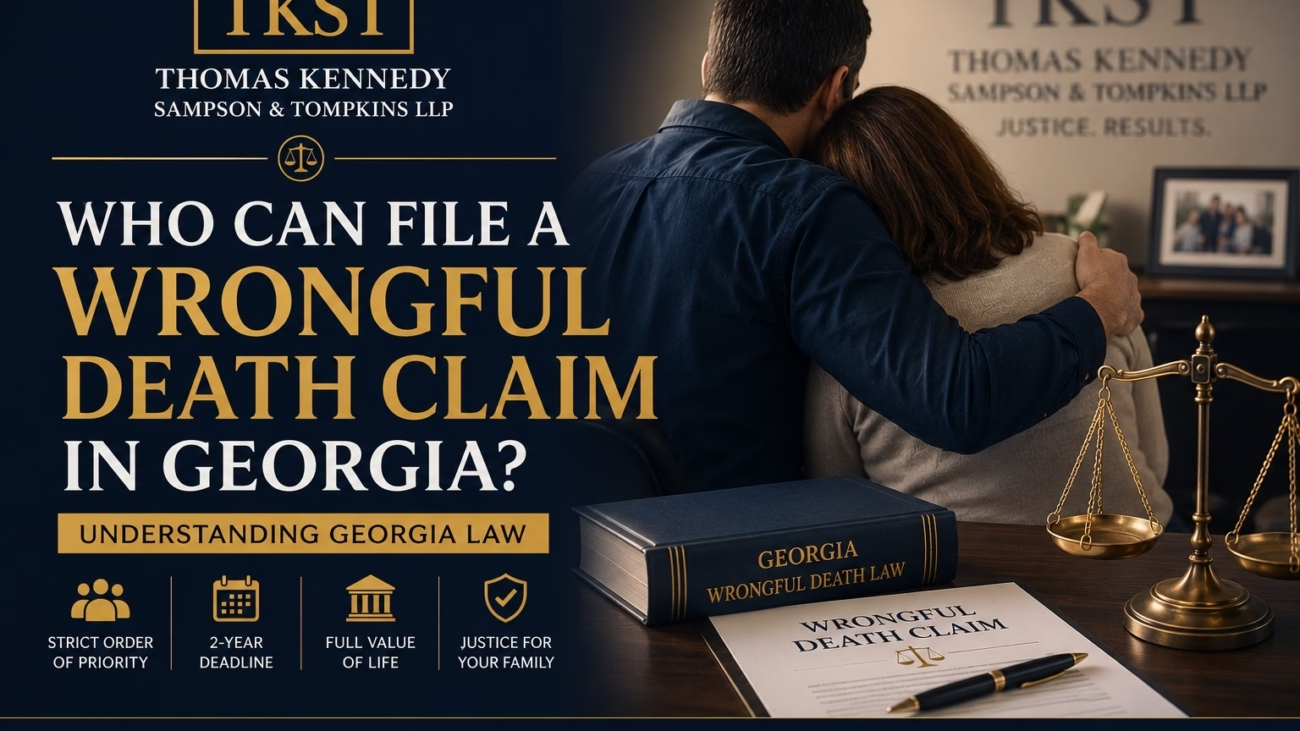
In Georgia, the right to file a wrongful death claim follows a strict legal order set by O.C.G.A. § 51-4-2: the surviving spouse files first. If there is no spouse, the children may file. If there are no children, the parents may file. If none of these survive, the administrator of the deceased person’s estate files on behalf of the next of kin.
Losing a loved one because of someone else’s negligence is devastating, and Georgia law does not let just anyone bring the claim. Understanding who holds the legal right to file — and how the two-year deadline works — is the first step toward protecting your family’s recovery.
Georgia’s Order of Priority for Wrongful Death Claims
Georgia law creates a clear hierarchy:
1. The surviving spouse. The spouse is the only person who can file when they survive the deceased. Importantly, if the deceased also left children, the spouse files on behalf of the children too and must share the recovery with them — but the spouse can never receive less than one-third of the total, no matter how many children there are.
2. The children. If there is no surviving spouse, the deceased’s children may bring the claim. Since a 2022 amendment, if a child of the deceased has also passed away, that child’s own descendants can recover their share (known as taking per stirpes).
3. The parents. If the deceased left no spouse and no children — which is often the case when a child or young adult dies — the parents hold the right to file under O.C.G.A. § 19-7-1. If the parents are divorced or separated, a court can apportion the recovery between them based on each parent’s relationship with the child.
4. The estate administrator. When there is no surviving spouse, child, or parent, the administrator or executor of the estate files the claim, and any recovery is held for the benefit of the next of kin.
What Is the “Full Value of the Life” in Georgia?
Georgia measures wrongful death damages differently from most states. The claim seeks the full value of the life of the deceased, from the deceased person’s own perspective — not the survivors’ losses.
That value has two parts:
– Economic value: lifetime earnings, benefits, and services the person would reasonably have provided.
– Intangible value: the lost experience of living itself — relationships, activities, and enjoyment of life.
This is separate from what the family “needed” from the deceased. A retiree with no income still has a life with substantial full value under Georgia law.
The Wrongful Death Claim vs. the Estate Claim
Georgia actually allows two separate claims after a fatal injury, and families often don’t realize both exist:
Claim
Who brings it
What it recovers
Wrongful death claim
Spouse → children → parents → administrator
Full value of the life of the deceased
Estate (survival) claim
Estate representative
Medical bills, funeral and burial costs, and the deceased’s conscious pain and suffering before death
Georgia’s statute of limitations for wrongful death is generally two years from the date of death — not the date of the injury. There are important exceptions:
– If a criminal prosecution arises from the same incident, the clock can pause until the case concludes (up to six years).
– If the estate has no administrator, the deadline can be paused for up to five years while the estate is unrepresented.
– Claims against government entities require ante litem notice much sooner — as little as six months for city claims.
What Types of Cases Lead to Wrongful Death Claims?
Any fatal injury caused by negligence or intentional conduct can support a claim, including car accidents, trucking accidents, medical malpractice, unsafe property conditions, and violent crime enabled by negligent security. Fault still matters: Georgia’s modified comparative fault rule applies, so the deceased’s share of fault can reduce — or, at 50% or more, bar — the recovery.
What If Family Members Disagree?
Disputes are common when a spouse remarried, children are from different relationships, or parents are divorced. Georgia courts can resolve how a recovery is divided, and children of the deceased have successfully compelled a non-filing spouse to pursue or share a claim. These situations are exactly why the filing hierarchy matters — the wrong person filing can jeopardize the case.
Talk to an Atlanta Wrongful Death Attorney
Thomas Kennedy Sampson & Tompkins LLP — Georgia’s oldest Black-owned law firm — has represented Georgia families in fatal injury cases for decades. Our wrongful death attorneys handle the legal burden so your family can grieve. Contact us for a free consultation or call (404) 688-4503.
FAQ
Who has the first right to file a wrongful death claim in Georgia?
The surviving spouse always files first under O.C.G.A. § 51-4-2. If the deceased also left children, the spouse files on their behalf and shares the recovery, but keeps no less than one-third.
Can siblings file a wrongful death claim in Georgia?
Not directly. Siblings may only benefit if no spouse, children, or parents survive — in that case the estate administrator files, and siblings can recover as next of kin.
How long do I have to file a wrongful death lawsuit in Georgia?
Generally two years from the date of death, though a related criminal case or an unrepresented estate can pause the deadline, and government claims require notice much sooner.
What is the “full value of the life” in a Georgia wrongful death case?
It is the measure of damages from the deceased’s perspective: lifetime economic contributions plus the intangible value of living — relationships, experiences, and enjoyment of life.
Can you file both a wrongful death claim and an estate claim?
Yes. The wrongful death claim recovers the full value of the life, while a separate estate claim recovers medical bills, funeral costs, and the deceased’s pre-death pain and suffering.
In April 2025, Governor Brian Kemp signed Senate Bill 68 into law — the most significant rewrite of Georgia’s civil justice rules in two decades. While the law touched everything from jury procedure to medical damages, no area was reshaped more dramatically than negligent security — the type of premises liability claim brought by people hurt by criminal acts on unsafe properties.
If you or a loved one was injured at an apartment complex, hotel, gas station, or parking lot, here is what the new law actually says — and what it means for your case.
What SB 68 Says About Negligent Security
1. A heightened foreseeability standard
Before SB 68, Georgia courts asked broadly whether a crime was foreseeable to the property owner. The new law, which amended the duties owed under O.C.G.A. § 51-3-1, replaces that flexible test with specific statutory triggers. For invitees — tenants, customers, and guests — a property owner can generally be held liable for third-party criminal conduct only if one of the following is true:
The owner received a specific warning of imminent harm and had actual knowledge of it;
Substantially similar crimes previously occurred on the property and the owner knew about them;
Substantially similar crimes occurred within 500 yards of the property, with the owner’s actual knowledge; or
The same perpetrator had engaged in prior conduct the owner knew or should have known about.
For licensees and trespassers, the standards are stricter still. The practical effect: a victim’s case now lives or dies on documented crime history and proof of what the owner actually knew.
2. Mandatory apportionment of fault to the criminal
SB 68 requires juries in negligent security cases to divide fault among the property owner, any security contractor, and the criminal who committed the act. It then goes further: if the jury assigns less total fault to the perpetrators than to the owner and its contractors, the verdict is presumed unreasonable and the trial court must set it aside and order a new trial unless that presumption is rebutted. This is one of the most defendant-friendly provisions in the entire law, and it directly affects how much a victim can recover from the property owner.
3. Other changes that affect premises cases
Medical damages: new rules on how medical bills are presented and valued at trial, aimed at the amounts actually paid rather than amounts billed.
Prospective application: the negligent security provisions apply to causes of action arising on or after the law’s effective date — older incidents are governed by the prior law.
Companion legislation (SB 69): regulates third-party litigation funding, with key provisions effective January 1, 2026, and makes funding agreements discoverable in many cases.
What SB 68 Means If You Were Hurt on an Unsafe Property
Your case is harder — not hopeless
Headlines called SB 68 the end of negligent security litigation in Georgia. That is an exaggeration. Apartment complexes with years of police calls, gas stations with documented robberies, and hotels that ignored prior assaults can still be held accountable. What changed is the burden of proof: cases must now be built on specific, admissible evidence of prior substantially similar crimes and the owner’s actual knowledge.
Evidence must be secured immediately
Police call logs, 911 records, prior incident reports, surveillance footage, and security staffing records are now the foundation of every claim. Much of this evidence is overwritten, purged, or ‘lost’ within weeks. Georgia’s two-year statute of limitations is the legal deadline, but the real evidence deadline is measured in days.
Apportionment makes attorney skill matter more
Because juries must now assign a meaningful share of fault to the criminal, the way your trial team frames the owner’s independent failures — broken gates, disabled cameras, ignored warnings — directly determines your recovery. This interacts with Georgia’s modified comparative fault rule, which already reduces or bars recovery based on a victim’s own share of fault.
How This Affects What Your Case Is Worth
Between apportionment and the new medical damages rules, insurers are valuing premises claims differently than they did before 2025. Victims with severe injuries — gunshot wounds, brain injuries, or the loss of a family member pursued through a wrongful death claim — should be especially cautious about early settlement offers. For context on valuation, see our guide: How Much Is My Personal Injury Case Worth in Georgia?
Talk to a Georgia Premises Liability Team That Tries Cases
Thomas Kennedy Sampson & Tompkins LLP has litigated Georgia premises liability cases for more than 50 years. Our Atlanta negligent security lawyers know exactly what evidence SB 68 demands and how to secure it before it disappears. Contact us for a free consultation or call (404) 688-4503.
Editorial note: this post summarizes SB 68 for general information and is not legal advice.
Quick Answer: Georgia is an at-fault state, not a no-fault state. This means that the driver who caused the accident is legally responsible for paying the damages of everyone they injure — through their own liability insurance. As an injured victim, you file your claim against the at-fault driver’s insurer, not your own. This distinction fundamentally shapes how your claim is handled, how quickly you can recover, and how much you can ultimately receive.
One of the most common questions we hear from injured Georgians is: “Is Georgia a no-fault state?” The short answer is no — and the difference matters enormously for how your injury claim works.
Whether you were hurt in a car accident, struck as a pedestrian, or injured as a motorcycle rider, understanding Georgia’s at-fault insurance system is the foundation of knowing your rights. This guide breaks down exactly how the system works, what it means for your claim, and what mistakes to avoid.
Georgia Is an At-Fault State — What That Actually Means
Georgia follows a tort-based or at-fault insurance system. Under this framework, the person who caused the accident bears legal and financial responsibility for the harm they caused. Their liability insurance exists specifically to compensate victims — you.
This is fundamentally different from a no-fault system, used in states like Florida, Michigan, and New York, where each driver’s own insurance pays for their own injuries regardless of who caused the crash — and where the right to sue is often restricted unless injuries cross a serious threshold.
In Georgia, there is no such restriction. If someone else caused your accident, you have the right to pursue full compensation for your medical expenses, lost wages, pain and suffering, and other damages — directly from the at-fault party and their insurer.
How the At-Fault System Flows Through a Georgia Injury Claim
Understanding the step-by-step flow helps you see where your rights lie — and where insurers tend to push back.
Step 1 — Establishing Who Is at Fault
Everything in a Georgia injury claim begins with fault. After an accident, both insurers — yours and the at-fault driver’s — will conduct their own investigations. Police reports, witness statements, traffic camera footage, and physical evidence all factor in.
This is also where Georgia’s modified comparative fault rule (O.C.G.A. § 51-11-7) becomes critical. If the insurer can argue you share some blame, they will — because even assigning you 20% or 30% of fault reduces their payout by that same percentage. An experienced attorney preserves evidence and controls this narrative from day one.
Step 2 — Filing a Third-Party Claim
In Georgia’s at-fault system, you file a third-party claim with the at-fault driver’s liability insurer. You are the third party — not their customer. This distinction matters: that insurer’s entire job is to minimize what they pay you, not to help you recover.
A third-party claim gives you access to the at-fault driver’s bodily injury liability limits. Under Georgia law (O.C.G.A. § 33-7-11), minimum required coverage is $25,000 per person and $50,000 per accident — though many policies carry significantly higher limits, and commercial vehicles like trucks are required to carry far more.
Step 3 — Negotiating a Settlement or Filing Suit
Once your medical treatment is complete — or you have reached maximum medical improvement — your attorney will prepare a demand package: a comprehensive document outlining your injuries, treatment, expenses, lost wages, and pain and suffering, supported by medical records and expert opinions.
The insurer will respond with a counteroffer. In most cases, there are multiple rounds of negotiation. If a fair settlement cannot be reached, your attorney files a lawsuit and the case moves toward trial.
At Thomas Kennedy Sampson & Tompkins LLP, we never settle for less than our clients deserve. Our 50+ year trial record means insurance companies know we will take a case to a jury if that’s what it takes — and that reputation directly shapes the offers we receive.
Step 4 — Your Own Insurance as a Safety Net
Even in an at-fault state, your own insurance plays an important role in certain situations:
Uninsured/Underinsured Motorist (UM/UIM) coverage — If the at-fault driver has no insurance or insufficient coverage, your own UM/UIM policy steps in. Georgia requires insurers to offer this coverage, making it one of the most important protections you can carry.
Medical Payments (MedPay) coverage — Pays your medical bills regardless of fault while your claim is pending, helping you get treatment without waiting for the at-fault insurer to settle.
Collision coverage — Covers your vehicle damage through your own insurer if you need faster repairs, with your insurer then seeking reimbursement from the at-fault party through subrogation.
Georgia vs. No-Fault States — The Key Differences
Feature
Georgia (At-Fault)
No-Fault States
Who pays your medical bills?
At-fault driver’s insurer
Your own PIP insurance
Can you sue for pain & suffering?
Yes — no threshold required
Only if injury meets a threshold
Who do you file a claim with?
At-fault driver’s insurer
Your own insurer (usually)
Is fault legally relevant?
Yes — determines everything
Less relevant for initial claim
Can you recover full damages?
Yes — no statutory cap
Often limited by PIP structure
Georgia’s at-fault system is generally more favorable to seriously injured victims because it gives them direct access to full compensation — including pain and suffering — without the restrictions no-fault states impose.
Georgia’s Minimum Insurance Requirements — And Why They Often Aren’t Enough
Under O.C.G.A. § 33-7-11, Georgia drivers are required to carry minimum liability coverage of:
$25,000 per person for bodily injury
$50,000 per accident for bodily injury (multiple victims)
$25,000 per accident for property damage
These minimums were last meaningfully updated decades ago. In today’s medical environment, $25,000 can be exhausted by a single emergency room visit and one night of hospitalization — before physical therapy, surgery, or specialist care even begins.
When the at-fault driver’s policy limits are inadequate, your attorney will explore every avenue for additional recovery:
Employer liability if the at-fault driver was working at the time
Vehicle owner liability if the driver was operating someone else’s car
Dram shop liability if alcohol was a factor and was served by a licensed establishment
Government liability if a road defect contributed to the crash
What the At-Fault System Means for Specific Accident Types
Car and Auto Accidents
The at-fault system applies directly and fully to car accidents and auto accidents in Georgia. The at-fault driver’s liability insurer is the primary source of recovery. Where multiple vehicles are involved, fault may be allocated across several parties.
Truck and Commercial Vehicle Accidents
Truck accidents are among the highest-value and most complex at-fault claims. Federal regulations require commercial carriers to carry minimum liability coverage of $750,000 (and up to $5,000,000 for hazardous materials). Multiple parties — the driver, trucking company, cargo loader, and maintenance contractor — may each share liability.
Motorcycle Accidents
Georgia’s at-fault system applies equally to motorcycle accidents. However, riders face a particular challenge: insurers often attempt to assign motorcyclists disproportionate fault based on bias against riders rather than evidence. An attorney who understands this dynamic is essential.
Rideshare Accidents (Uber & Lyft)
In Uber and Lyft accidents, the at-fault system applies but with added complexity. Which insurance policy applies — the driver’s personal policy, the rideshare company’s contingent coverage, or its full $1,000,000 commercial policy — depends on the driver’s status at the time of the crash (offline, available, or on-trip).
Pedestrian and Bicycle Accidents
When a driver strikes a pedestrian or bicyclist, the at-fault system means the driver’s liability insurance is responsible for the victim’s full damages. These cases often involve serious injuries — and insurers often attempt to argue the pedestrian or cyclist contributed to the accident to reduce their payout.
The Biggest Mistakes Georgia Accident Victims Make in the At-Fault System
Understanding the system is one thing. Navigating it without making costly errors is another. Here are the mistakes we see most often:
Giving a recorded statement to the at-fault insurer
The at-fault driver’s insurer is not your insurer. They owe you nothing except what the law requires — and their goal is to minimize that amount. Any recorded statement you give them before consulting an attorney can and will be used to assign you comparative fault or challenge the severity of your injuries.
Accepting an early settlement offer
Early offers in Georgia at-fault claims are almost always calculated to resolve the case before the full extent of your injuries is known. Once you accept and sign a release, your claim is closed permanently — even if your condition worsens or additional treatment becomes necessary.
Delaying medical treatment
Gaps between the accident and your first medical visit — or between visits — are used by insurers to argue that your injuries weren’t serious or weren’t caused by the accident. Seek medical attention immediately and follow your treatment plan consistently.
Not understanding your own policy’s UM coverage
Many Georgia drivers don’t realize they have uninsured motorist coverage, or don’t understand how it works as a supplement when the at-fault driver’s coverage falls short. Review your own policy with your attorney before settling anything.
Frequently Asked Questions
Is Georgia a no-fault or at-fault state for car insurance?
Georgia is an at-fault state. The driver who caused the accident is legally responsible for compensating victims. You file your claim with the at-fault driver’s liability insurer, not your own — unless you are pursuing UM/UIM coverage or MedPay through your policy.
Do I have to file a claim with my own insurance after a Georgia car accident?
Not necessarily. In Georgia’s at-fault system, your first step is typically filing a third-party claim with the at-fault driver’s insurer. You may also use your own MedPay coverage for immediate medical bills, or your UM/UIM coverage if the at-fault driver is uninsured or underinsured.
What if the at-fault driver’s insurance isn’t enough to cover my damages?
This is one of the most common challenges in Georgia injury claims. Your attorney will explore your own UM/UIM coverage, identify any additional liable parties (employers, vehicle owners, etc.), and — in cases involving drunk drivers, potential dram shop liability against the establishment that served them.
Can I still recover damages if I was partially at fault for a Georgia car accident?
Yes — as long as you were less than 50% at fault. Georgia’s modified comparative fault rule (O.C.G.A. § 51-11-7) reduces your recovery by your fault percentage but does not bar you from recovery unless you are 50% or more at fault.
How long do I have to file a car accident claim in Georgia?
Georgia’s statute of limitations for personal injury claims is two years from the date of the accident (O.C.G.A. § 9-3-33). Claims against government entities have significantly shorter deadlines. Do not wait — evidence degrades and witnesses become harder to locate over time.
Should I talk to the at-fault driver’s insurance company without a lawyer?
No. The at-fault insurer’s adjuster is trained to minimize payouts. Speaking with them without legal representation — especially in a recorded statement — risks compromising your claim. Contact an attorney before making any statements to any insurer other than your own.
Talk to a Georgia Car Accident Attorney — Free Consultation
Georgia’s at-fault insurance system gives injured victims real rights — but exercising those rights effectively requires knowing how to deal with insurers who are motivated to pay as little as possible.
At Thomas Kennedy Sampson & Tompkins LLP, we have spent over 50 years protecting Georgia injury victims in the at-fault claims process. We handle all communications with insurers on your behalf, build the strongest possible case, and fight for the full compensation you deserve — at trial if necessary.
Our clients have recovered 7- and 8-figure results in cases where insurers initially offered far less. We work on contingency — you pay nothing unless we win.
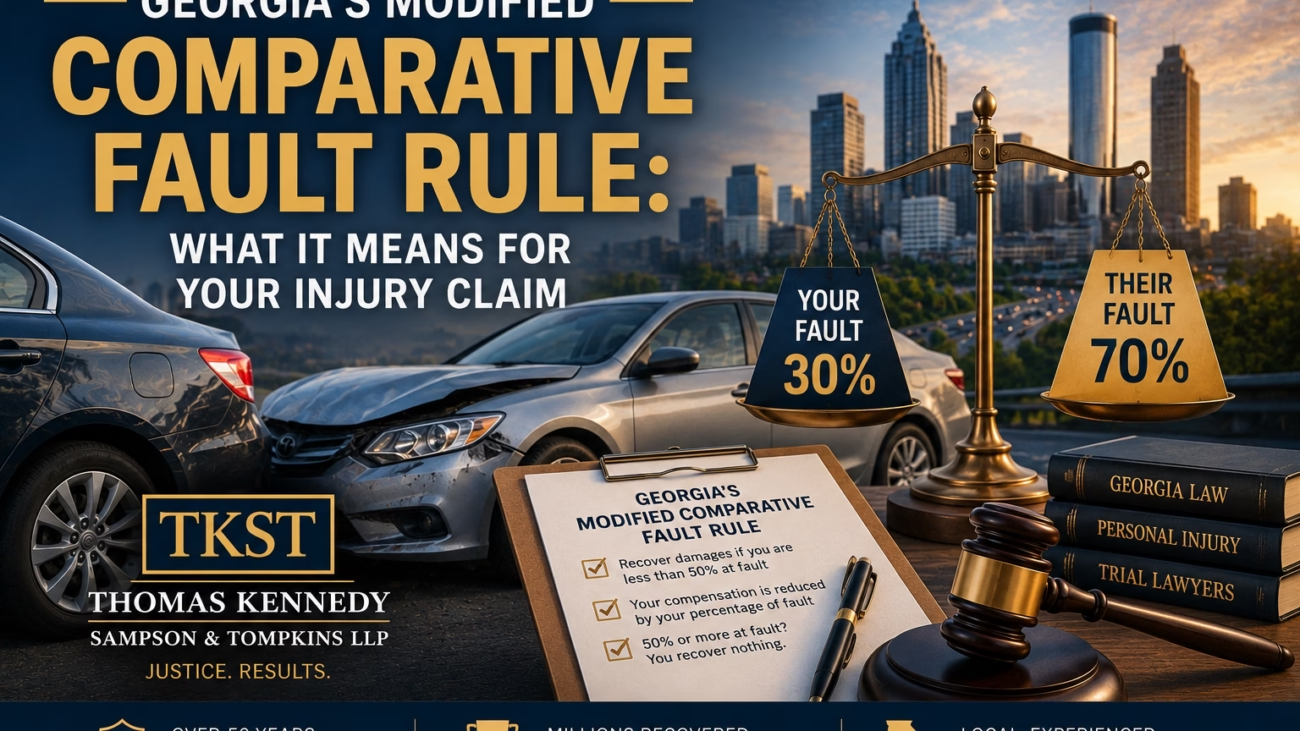
Quick Answer: Georgia follows a modified comparative fault rule under O.C.G.A. § 51-11-7. If you are partially at fault for an accident, your compensation is reduced by your percentage of fault. However, if you are found 50% or more at fault, you are completely barred from recovering any damages. This rule is one of the most aggressively used tools by insurance companies in Georgia — and understanding it could be the difference between a full recovery and no recovery at all.
After an accident, one of the first things an insurance adjuster will try to establish is whether you share any blame. It doesn’t matter if the other driver ran a red light, if a property owner left a dangerous condition unaddressed, or if a truck driver was fatigued behind the wheel. The insurer’s job is to minimize what they pay — and Georgia’s comparative fault rule is their favorite weapon to do it.
Understanding how this law works, how it gets applied in real cases, and how experienced Georgia trial attorneys protect clients against unfair fault assignments is essential knowledge for any injury victim in this state.
What Is Georgia’s Modified Comparative Fault Rule?
Georgia operates under a modified comparative fault system, codified at O.C.G.A. § 51-11-7. The law has two core principles:
Principle 1 — Proportional Recovery: If you are partially at fault for an accident, your damages are reduced in direct proportion to your share of fault.
Principle 2 — The 50% Bar: If you are found to be 50% or more at fault, you recover nothing. You are completely barred from bringing a claim.
How the Rule Works in Practice — Real Examples
Example 1 — Car Accident
You are driving through an intersection on a green light when another driver runs the red and strikes your vehicle. Your total damages amount to $200,000. The at-fault driver’s insurer argues you were 8 mph over the speed limit and assigns you 20% fault.
Your recovery: $200,000 × (1 − 0.20) = $160,000
This scenario plays out in car accident and auto accident cases every day across Georgia — and it’s the most common context where comparative fault arguments are raised.
Example 2 — Slip and Fall
You slip on a wet floor at a grocery store in Atlanta. Your injuries total $120,000. The store argues you weren’t paying attention. The jury assigns you 30% fault.
Your recovery: $120,000 × (1 − 0.30) = $84,000
Example 3 — The 50% Bar in Action
A pedestrian is struck by a vehicle while crossing outside a marked crosswalk. Total damages are $300,000. The jury finds the pedestrian 51% at fault.
Recovery: $0. The 50% bar eliminates the claim entirely.
How Insurance Companies Use This Rule Against You
Make no mistake: insurance adjusters are trained to use Georgia’s comparative fault rule strategically.
The Recorded Statement Trap: Adjusters call within days asking for a recorded statement. Questions are designed to get you to admit partial responsibility — which is then documented and used to inflate your fault percentage.
Early Low-Ball Offers: Quick settlement offers are quietly discounted to reflect an inflated fault percentage they’ve assigned you internally.
Manufactured Evidence: In serious cases, insurers hire accident reconstruction experts specifically to build a case that you share blame.
Comparative Fault Counterclaims: Defense attorneys routinely assert that the plaintiff bears significant responsibility — even in cases where the evidence clearly favors the victim. This is a pressure tactic to force lower settlements.
What Factors Determine Fault Percentage in Georgia?
Whether the victim was paying reasonable attention
Whether posted warnings were present and visible
In truck accident cases:
Driver hours of service compliance
Vehicle maintenance records
Cargo loading and securement
Whether the victim was in the truck’s blind spot
Truck accident cases are particularly prone to comparative fault disputes because multiple parties — the driver, the trucking company, and the cargo loader — may each try to shift blame onto the victim or each other.
Georgia vs. Other Fault Systems
Fault System
States
Key Rule
Pure contributory negligence
AL, MD, NC, VA, DC
Any fault by victim = zero recovery
Modified comparative (50% bar)
Georgia + ~20 states
50%+ fault = zero recovery
Modified comparative (51% bar)
~30 states
51%+ fault = zero recovery
Pure comparative fault
CA, FL, NY + others
Recovery reduced regardless of fault %
Georgia’s 50% bar is stricter than the 51% bar used in many other states — a victim who is exactly 50% at fault in Georgia recovers nothing, while the same victim in a 51% bar state would still recover 50% of their damages.
The Role of Your Attorney in Fault Disputes
Preserving and Controlling Evidence: The moment TKST takes a case, we move to preserve all available evidence — surveillance footage, black box data, phone records, witness statements — before it is lost or spun by the other side.
Countering the Insurance Narrative: We retain our own accident reconstruction experts, medical experts, and vocational experts to build an independent, evidence-backed account of what happened.
Keeping You Off the Record: We advise clients from day one: do not give recorded statements to opposing insurance companies. Do not post about the accident on social media.
Taking the Case to Trial When Necessary: At Thomas Kennedy Sampson & Tompkins LLP, we have been trying cases in Georgia courtrooms for over 50 years. Our attorneys have secured 7- and 8-figure results in cases where fault was aggressively disputed by the defense.
Special Situations Where Comparative Fault Gets More Complex
Multiple Defendants: When more than one party is at fault, Georgia’s comparative fault principles apply across all responsible parties. An experienced attorney will identify and pursue all liable defendants.
Employer Liability: If the at-fault party was acting within the scope of their employment — a delivery driver, a company vehicle operator — their employer may share liability, opening the door to the employer’s insurance policy and assets.
Government Entities: Claims against Georgia state or local government entities involve special procedures under the Georgia Tort Claims Act (O.C.G.A. § 50-21-20 et seq.), including mandatory ante litem notice requirements with very short deadlines.
Wrongful Death Cases: In Georgia wrongful death claims, the comparative fault of the deceased can still be raised as a defense by the defendant — one of the most painful aspects of these cases.
Frequently Asked Questions
Can I still file a personal injury claim in Georgia if I was partially at fault?
Yes — as long as you were less than 50% at fault, you can still recover damages. Your recovery is reduced by your fault percentage. For example, if you were 30% at fault and your damages are $100,000, you recover $70,000.
What happens if I am found exactly 50% at fault in Georgia?
Under O.C.G.A. § 51-11-7, being found 50% at fault bars you from any recovery. The threshold is strict — you must be less than 50% at fault to recover anything.
Who decides how much fault I bear — a judge or a jury?
In cases that go to trial, fault percentage is determined by the jury. In cases that settle before trial, it is effectively negotiated between the parties and their attorneys.
Can the insurance company just decide I’m 50% at fault and deny my claim?
An insurer can take that position internally, but they cannot unilaterally impose a legal finding of fault. If you dispute their determination, the matter can be litigated and a jury can make the actual fault finding.
Does Georgia’s comparative fault rule apply to all types of personal injury cases?
How does comparative fault affect a wrongful death claim in Georgia?
The comparative fault of the deceased can be raised as a defense in a Georgia wrongful death case. If proven, it reduces the damages the surviving family can recover by the decedent’s percentage of fault.
The Bottom Line: Fault Is Not Fixed — It Is Fought For
Georgia’s modified comparative fault rule is a battleground where insurance companies fight to reduce or eliminate what they owe injury victims. At Thomas Kennedy Sampson & Tompkins LLP, we have spent over five decades protecting Georgia injury victims from exactly this kind of insurance strategy.
If you have been injured in Georgia and someone is arguing you share the fault, do not accept that position without getting a second opinion from an experienced trial lawyer.
Talk to a Georgia Personal Injury Attorney — Free Consultation
The sooner you speak with an attorney after an accident, the better your chances of preserving evidence and controlling the fault narrative before the other side shapes it. Consultations are free and you pay nothing unless we win your case.
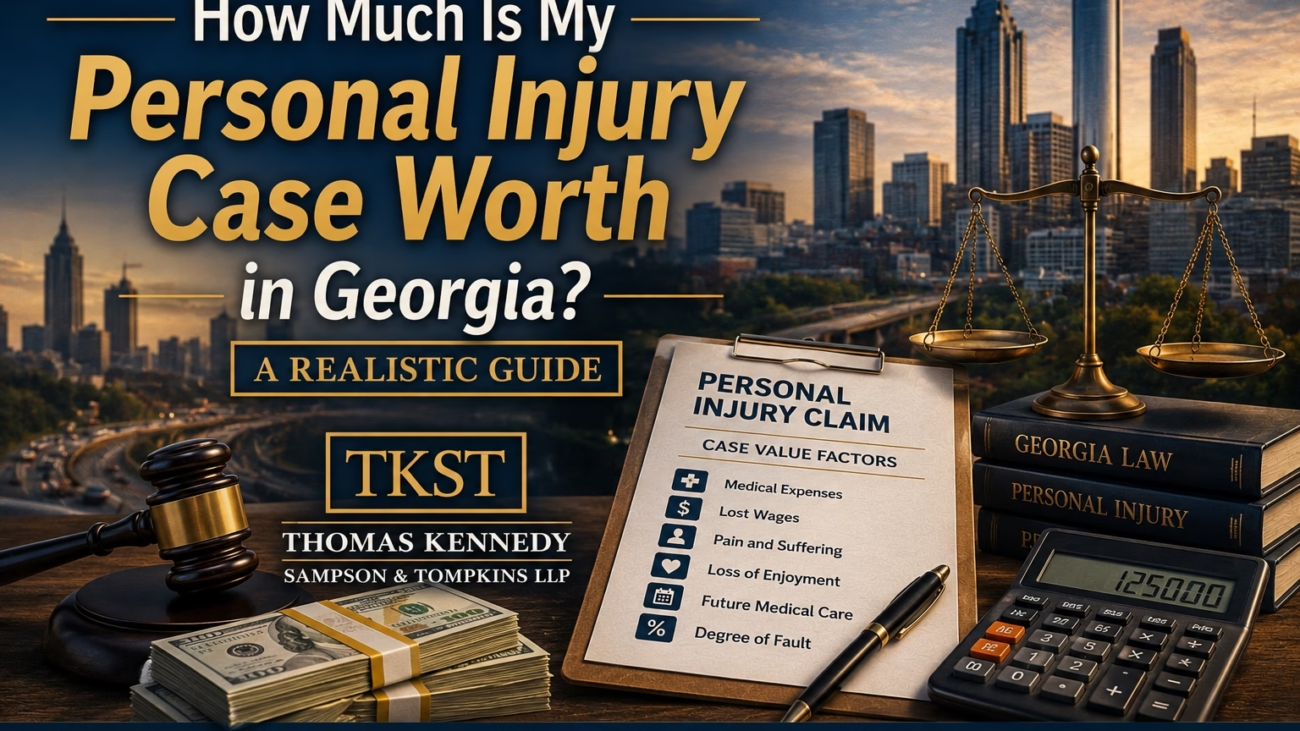
Quick Answer: In Georgia, personal injury settlements range from a few thousand dollars for minor injuries to millions for catastrophic harm. The value of your case depends on your medical costs, lost income, degree of fault, and the extent of your pain and suffering. Georgia law does not cap most personal injury damages, meaning victims can pursue the full financial impact of their injuries. At TKST Law, we have secured numerous 7- and 8-figure results for Georgia injury victims since 1971.
One of the first questions people ask after an accident is: “What is my case actually worth?”
It’s a fair question — and an important one. But it’s also one that any honest attorney will tell you cannot be answered with a single number without reviewing the specific facts of your situation.
What we can do is walk you through exactly how Georgia law calculates personal injury damages, what factors push a case value higher or lower, and what real settlements in Georgia tend to look like — so you can walk into any conversation with an attorney informed and prepared.
The Two Categories of Damages in a Georgia Personal Injury Case
Georgia law divides personal injury damages into two broad categories: economic damages and non-economic damages. Understanding both is essential to understanding what your case could be worth.
1. Economic Damages (Quantifiable Losses)
These are losses that have a specific, calculable dollar value. They include:
Medical Expenses This covers all injury-related medical costs — emergency room visits, surgeries, hospitalization, physical therapy, prescription medication, medical equipment, and any anticipated future treatment. Georgia courts allow you to recover both past and future medical expenses, which is significant in serious injury cases where ongoing care may be needed for years.
Lost Wages and Lost Earning Capacity If your injury kept you out of work — whether for two weeks or two years — you can claim that lost income. More importantly, if your injury permanently affects your ability to earn at the same level you did before, Georgia law allows you to recover for future lost earning capacity. This figure is often calculated with the help of an economic expert who projects your career trajectory and income potential.
Property Damage In car accident cases, this includes the cost to repair or replace your vehicle and any personal property damaged in the crash.
Out-of-Pocket Expenses Transportation to medical appointments, in-home care, modifications to your home (ramps, grab bars, etc.), and other costs directly resulting from the injury are all recoverable.
2. Non-Economic Damages (Human Losses)
These are real losses that don’t come with a receipt. Georgia law recognizes them fully, and they are often the largest component of serious injury settlements.
Pain and Suffering This compensates you for the physical pain your injury caused — both what you’ve already endured and what you can reasonably expect in the future.
Emotional Distress Anxiety, depression, PTSD, and psychological trauma resulting from a traumatic accident or injury are compensable in Georgia.
Loss of Enjoyment of Life If your injury has prevented you from participating in activities you valued — sports, hobbies, travel, being present for your children — Georgia law allows you to seek compensation for that loss.
Loss of Consortium Spouses of injury victims can recover separately for the impact the injury has had on their relationship, including loss of companionship and intimacy.
How Georgia Calculates Pain and Suffering (No Formula, But Two Methods)
Unlike medical bills — which have a fixed cost — pain and suffering doesn’t have a price tag. In practice, Georgia attorneys and insurance adjusters typically use one of two methods:
The Multiplier Method Your total economic damages are multiplied by a number between 1.5 and 5 (sometimes higher in catastrophic cases), depending on the severity and permanence of your injuries. A broken wrist that heals fully might warrant a 1.5x multiplier. A traumatic brain injury or spinal cord damage might justify 4x or 5x — or higher.
Example: $80,000 in medical bills × 3 (moderate multiplier) = $240,000 in pain and suffering damages.
The Per Diem Method A daily dollar amount is assigned to your pain and suffering, then multiplied by the number of days you suffered. For instance, $150/day × 365 days = $54,750.
In practice, experienced Georgia trial lawyers use both methods to build the most compelling argument for maximum compensation — and insurers know it.
Key Factors That Affect How Much Your Georgia Case Is Worth
Two cases with similar injuries can result in very different outcomes. Here is why:
Comparative Fault (This One Can Reduce Your Recovery Significantly)
Georgia follows a modified comparative fault rule under O.C.G.A. § 51-11-7. This means that if you were partially at fault for the accident, your damages are reduced by your percentage of fault. If you are found 50% or more at fault, you recover nothing.
Example: Your damages total $200,000. You are found 25% at fault. Your recovery is reduced to $150,000.
Insurance companies aggressively use this rule to minimize payouts by arguing you share blame — even when you don’t. This is one reason having an experienced Georgia trial lawyer is so important.
Severity and Permanence of the Injury
Cases involving permanent disability, disfigurement, traumatic brain injury, spinal cord damage, or wrongful death are worth significantly more than those involving temporary injuries. The more your life has been fundamentally and permanently altered, the more the law allows you to recover.
The Defendant’s Insurance Coverage
Georgia requires minimum auto liability coverage of $25,000 per person / $50,000 per accident (under O.C.G.A. § 33-7-11). However, many serious injury victims face defendants whose policy limits are far too low to cover the full extent of their losses.
In these situations, your own Uninsured/Underinsured Motorist (UM/UIM) coverage becomes critically important — and so does identifying other potentially liable parties, such as an employer, vehicle owner, or property manager.
Quality of Medical Documentation
Georgia courts and insurance companies rely heavily on medical records. Gaps in treatment, delays in seeking care, or records that don’t clearly connect your injuries to the accident can seriously harm your case value. Documenting your injuries thoroughly — and consistently following your doctor’s treatment plan — matters enormously.
Whether the Case Goes to Trial
The vast majority of personal injury cases settle before trial. But the threat of trial — and whether your attorney is a credible trial lawyer — directly impacts what an insurance company will offer. Insurers research attorneys and adjust settlement offers based on whether they believe a lawyer will actually take a case to a jury. At TKST Law, we are trial lawyers first. Our courtroom record is known, and it shows in the settlements we secure.
What Do Georgia Personal Injury Cases Actually Settle For
There is no single “average” figure because settlements vary so dramatically based on injury type. That said, here are realistic ranges based on case categories we handle:
These are general benchmarks. Your individual case could fall above or below these ranges depending on the factors discussed above.
At Thomas Kennedy Sampson & Tompkins LLP, we have secured numerous 7- and 8-figure settlements for Georgia injury victims across car accidents, truck accidents, wrongful death, and medical malpractice cases. Our results reflect over 50 years of trial experience and a willingness to fight as long as it takes to get our clients what they deserve.
Does Georgia Cap Personal Injury Damages?
For most personal injury cases — car accidents, slip and fall, truck accidents, pedestrian accidents — Georgia does not cap economic or non-economic damages. You can pursue the full measure of your losses.
There is one notable exception: medical malpractice cases previously had a cap on non-economic damages, but the Georgia Supreme Court struck down that cap in Atlanta Oculoplastic Surgery, P.C. v. Nestlehutt (2010), ruling it unconstitutional. Georgia medical malpractice victims may now seek full non-economic damages.
Punitive damages — which are designed to punish egregious conduct — are generally capped at $250,000 under O.C.G.A. § 51-12-5.1, with exceptions for cases involving specific intent to harm or DUI-related conduct.
What Reduces a Case’s Value — And What Protects It
Things that can hurt your case value:
Waiting too long to seek medical treatment after an accident
Gaps in your medical treatment history
Posting on social media about your activities while claiming serious injury
Giving a recorded statement to the insurance company without an attorney
Being found partially at fault for the accident
Things that protect and increase your case value:
Seeking medical attention immediately after the accident
Following your doctor’s treatment plan consistently
Documenting all expenses, lost wages, and impact on daily life
Working with an attorney before communicating with any insurer
Retaining a firm with genuine trial experience — not just a settlement mill
The Statute of Limitations: Don’t Wait
Under O.C.G.A. § 9-3-33, Georgia personal injury victims generally have two years from the date of injury to file a lawsuit. If you miss this deadline, you lose the right to pursue compensation permanently — regardless of how strong your case is.
There are limited exceptions:
Minors — the clock typically doesn’t begin running until they turn 18
Cases against government entities — special ante litem notice requirements apply with much shorter deadlines (sometimes as little as 6 to 12 months)
Medical malpractice — additional notice requirements apply
Do not assume you have time. If you’ve been injured, speak with an attorney as soon as possible.
Frequently Asked Questions
Q: How do lawyers calculate pain and suffering in Georgia? A: Georgia doesn’t use a fixed formula. Attorneys typically use either a multiplier method (multiplying economic damages by 1.5–5x) or a per diem method (assigning a daily rate to your pain). The right approach depends on the nature and duration of your injury.
Q: Can I still recover damages if I was partially at fault in a Georgia car accident? A: Yes — as long as you were less than 50% at fault. Under Georgia’s modified comparative fault rule (O.C.G.A. § 51-11-7), your damages are reduced by your percentage of fault, but you can still recover if you were less than half responsible.
Q: Does Georgia cap pain and suffering damages? A: No. For most personal injury cases, Georgia places no cap on non-economic damages including pain and suffering. The Georgia Supreme Court struck down the medical malpractice non-economic cap in 2010.
Q: How long does it take to settle a personal injury case in Georgia? A: Minor cases can settle in 3–6 months. Moderate cases often take 1–2 years. Complex cases involving serious injuries or disputed liability can take 2–4 years, especially if they go to trial.
Q: What if the at-fault driver had no insurance? A: Your own Uninsured Motorist (UM) coverage becomes your primary source of recovery. Georgia law requires insurers to offer UM coverage (though you can decline it in writing). Your attorney can also identify other potentially liable parties.
Q: Do I need a lawyer to settle a personal injury claim in Georgia? A: You are not legally required to have one. But studies consistently show that injury victims represented by attorneys recover significantly more — even after attorney fees — than those who negotiate alone. And at TKST Law, you pay nothing unless we win.
Talk to a Georgia Personal Injury Attorney — Free Consultation
If you’ve been injured in Georgia, the best way to understand what your specific case is worth is to have an experienced attorney review the details. At Thomas Kennedy Sampson & Tompkins LLP, we offer free consultations with no obligation.
We have been fighting for Georgia injury victims since 1971. As Georgia’s oldest Black-owned law firm, our legacy is built on real results, real courtroom experience, and genuine care for every client we serve.
Thomas Kennedy Sampson & Tompkins LLP | 3355 Main Street, Atlanta, Georgia 30337 | info@tkst-triallawyers.com
This article is for informational purposes only and does not constitute legal advice. Reading this content does not create an attorney-client relationship. For advice specific to your situation, please contact our office directly.
Not every car accident looks serious at first. A small dent, minor soreness, and both drivers walking away — it may seem like something you can handle without legal help. But in many cases, what appears to be a “minor” accident can turn into a complicated situation involving injuries, insurance disputes, and unexpected costs.
So, do you need a lawyer for a minor car accident in Georgia? The answer depends on the details — and understanding when to involve a legal professional can make a significant difference in your outcome.
At Thomas Kennedy Sampson & Tompkins LLP, we help accident victims across Atlanta make informed decisions and protect their rights from the very beginning.
What Is Considered a “Minor” Car Accident?
A minor car accident usually involves:
Little to no visible vehicle damage
No immediate serious injuries
Both vehicles still drivable
However, the term “minor” can be misleading. Many injuries and complications don’t appear right away.
When You May NOT Need a Lawyer
In some cases, you might be able to handle the situation without legal help. For example:
No injuries occurred
Property damage is minimal
Fault is clearly established
The insurance company offers a fair settlement quickly
Even in these situations, it’s still wise to stay cautious and document everything carefully.
When You SHOULD Hire a Lawyer After a Minor Accident
There are several situations where hiring a car accident attorney in Atlanta is highly recommended — even if the crash seemed minor at first.
1. You Start Experiencing Pain Later
Injuries like whiplash, soft tissue damage, or concussions can take hours or days to show symptoms. If pain develops after the accident, your case is no longer “minor.”
2. The Insurance Company Is Delaying or Denying Your Claim
Insurance companies often try to minimize payouts. If your claim is delayed, denied, or undervalued, a lawyer can step in and protect your interests.
3. Fault Is Disputed
If the other driver claims you were responsible, or if there’s conflicting evidence, legal guidance is essential. Georgia’s comparative negligence rule can reduce your compensation if fault is shared.
4. You’re Offered a Low Settlement
Quick settlement offers may seem convenient, but they often don’t account for long-term costs. Once you accept an offer, you usually can’t ask for more later.
5. You’re Unsure About Your Rights
If you’re asking whether you need a lawyer — it’s often a sign that you should at least consult one. A quick legal review can clarify your options and prevent costly mistakes.
How Georgia Law Impacts Minor Accident Claims
Georgia follows a modified comparative negligence rule, meaning:
You can recover damages if you are less than 50% at fault
Your compensation is reduced based on your percentage of fault
This rule is often used by insurance companies to shift blame — even in minor accidents. Having a lawyer ensures that fault is assigned fairly.
What a Lawyer Can Do — Even for a Minor Accident
Hiring a lawyer doesn’t always mean going to court. In many cases, it simply means having someone protect your rights while you recover.
If you’ve been injured due to someone else’s negligence, you may be entitled to compensation — but many people don’t fully understand what that actually includes. A personal injury claim is not just about covering immediate medical bills; it’s about recovering the full financial and emotional impact of the accident.
At Thomas Kennedy Sampson & Tompkins LLP, our experienced team helps clients across Atlanta understand their rights and pursue the compensation they deserve under Georgia law.
Understanding Personal Injury Compensation in Georgia
In Georgia, personal injury compensation is designed to make the injured person “whole” again — as much as possible. This typically includes both economic damages (financial losses) and non-economic damages (personal suffering).
The total value of your claim depends on factors such as the severity of your injuries, long-term impact, and who was at fault.
1. Medical Expenses
One of the most important parts of any injury claim is medical compensation. This includes:
Emergency room visits
Hospital stays and surgeries
Doctor consultations and follow-ups
Prescription medications
Physical therapy and rehabilitation
Future medical treatment
Even if your treatment is ongoing, you can claim future medical costs based on expert evaluations.
2. Lost Wages and Loss of Earning Capacity
If your injuries prevent you from working, you can recover:
Lost income during recovery
Missed bonuses or commissions
Reduced ability to work in the future
In more serious cases, if your injury affects your long-term career, you may be compensated for loss of earning capacity — which can significantly increase your claim value.
3. Pain and Suffering
Not all damages are financial. Georgia law allows compensation for the physical pain and emotional distress caused by your injuries.
This includes:
Chronic pain
Emotional trauma or anxiety
Loss of enjoyment of life
Reduced quality of life
These damages are often a major portion of a personal injury settlement, especially in serious cases.
4. Property Damage
If your personal property was damaged in the accident — such as your vehicle in a car crash — you may be compensated for:
Repair costs
Replacement value (if totaled)
Rental vehicle expenses
While often handled separately, property damage is still an important part of your overall claim.
5. Emotional Distress and Mental Anguish
Beyond physical pain, many injury victims experience psychological effects such as:
Depression or anxiety
PTSD (post-traumatic stress disorder)
Sleep disturbances
These emotional impacts are recognized under Georgia law and can be included in your claim.
6. Permanent Disability or Disfigurement
If your injury results in long-term or permanent effects, compensation may increase significantly. This includes:
Loss of mobility
Scarring or disfigurement
Permanent disability
Long-term medical care
These cases often require expert testimony to determine the full lifetime impact of the injury.=
7. Punitive Damages (In Certain Cases)
In some cases, Georgia courts may award punitive damages. These are not meant to compensate you directly, but to punish the at-fault party for extreme negligence or reckless behavior.
Examples include:
Drunk driving accidents
Gross misconduct or intentional harm
Punitive damages are less common but can significantly increase total compensation in qualifying cases.
How Georgia’s Comparative Negligence Law Affects Compensation
Georgia follows a modified comparative negligence rule, which means:
You can recover compensation if you are less than 50% at fault
Your compensation is reduced based on your percentage of fault
For example, if you are found 20% responsible, your total compensation is reduced by 20%. Insurance companies often use this rule to minimize payouts — which is why legal representation is critical.
How Much Is Your Personal Injury Case Worth?
There is no fixed value for a personal injury claim. Every case is different. The value depends on:
Why You Shouldn’t Accept the First Settlement Offer
Insurance companies often make quick settlement offers that seem attractive but are far below what your case is actually worth.
Before accepting any offer, it’s important to:
Understand the full extent of your injuries
Calculate long-term costs
Consult with a legal professional
Once you accept a settlement, you typically cannot pursue additional compensation — even if your condition worsens.
How an Atlanta Personal Injury Lawyer Can Help
At Thomas Kennedy Sampson & Tompkins LLP, we help clients maximize their compensation by:
Accurately calculating all damages
Gathering strong evidence
Negotiating with insurance companies
Taking cases to trial when necessary
We work on a contingency fee basis — meaning you pay nothing unless we win your case.
Get the Compensation You Deserve
If you’ve been injured in an accident in Georgia, understanding what compensation you can claim is the first step toward recovery. Don’t let insurance companies decide what your case is worth.
Truck accidents are often far more complex than standard car crashes. When a collision involves a large commercial truck, determining who is responsible isn’t always straightforward. Multiple parties may share liability — and each may have their own insurance company and legal team working to minimize responsibility.
If you’ve been injured in a trucking accident, understanding who is liable in a truck accident in Georgia is essential to protecting your right to compensation.
At Thomas Kennedy Sampson & Tompkins LLP, our experienced attorneys help victims across Atlanta navigate complex truck accident claims and hold all responsible parties accountable.
Why Truck Accident Cases Are More Complicated
Unlike typical car accidents, trucking accidents often involve:
Commercial drivers
Large trucking companies
Strict federal and state regulations
Multiple insurance policies
Because of this, liability is rarely limited to just one person. Identifying every responsible party is key to maximizing your compensation.
Potentially Liable Parties in a Georgia Truck Accident
1. The Truck Driver
The driver may be liable if their negligence caused the accident. Common examples include:
Distracted driving
Fatigue (violating hours-of-service rules)
Speeding or reckless driving
Driving under the influence
Truck drivers are held to higher safety standards due to the size and danger of commercial vehicles.
2. The Trucking Company
In many cases, the trucking company is also responsible. Employers can be held liable for their drivers’ actions under a legal concept called vicarious liability.
A trucking company may also be directly negligent if they:
Failed to properly train or supervise drivers
Encouraged unsafe driving schedules
Ignored maintenance issues
Hired unqualified drivers
This is why trucking companies often act quickly after an accident — to protect themselves from liability.
3. The Cargo Loading Company
Improperly loaded or unsecured cargo can cause serious accidents. If cargo shifts during transport, it can:
Make the truck unstable
Increase stopping distance
Lead to rollovers or jackknife accidents
If a third-party company was responsible for loading the truck, they may share liability.
4. Truck Manufacturers or Parts Suppliers
Sometimes, accidents are caused by mechanical failure rather than driver error. In these cases, manufacturers or parts suppliers may be held liable for:
Brake failures
Tire blowouts
Steering or engine defects
These cases often involve product liability claims and require expert analysis.
5. Maintenance and Repair Companies
Commercial trucks require regular inspections and maintenance. If a maintenance company failed to properly service the vehicle, they may be responsible for accidents caused by mechanical issues.
6. Government Entities
In some situations, poor road conditions may contribute to a trucking accident. This includes:
Unsafe road design
Lack of signage
Potholes or road hazards
If a government entity failed to maintain safe road conditions, it may be partially liable — though claims against government agencies involve special rules and deadlines.
How Georgia’s Comparative Negligence Law Affects Liability
Georgia follows a modified comparative negligence rule, which means:
You can recover compensation if you are less than 50% at fault
Your compensation is reduced by your percentage of fault
Insurance companies often try to shift blame onto victims to reduce payouts. For example, they may argue that you were speeding or not paying attention — even when the truck driver was primarily responsible.
Truck accident cases rely heavily on detailed evidence, including:
Police accident reports
Driver logs and hours-of-service records
Truck “black box” data (electronic logging devices)
Maintenance and inspection records
Dashcam or traffic camera footage
Witness statements
Because trucking companies often act quickly to secure or limit access to this evidence, it’s important to involve a lawyer as soon as possible.
Why Determining Liability Matters
Identifying all liable parties is critical because it directly impacts:
The total compensation available
The number of insurance policies involved
The strength of your claim
Truck accident claims often involve higher damages due to severe injuries — making it even more important to pursue every responsible party.
How an Atlanta Truck Accident Lawyer Can Help
Truck accident cases are complex and require a strategic legal approach. At Thomas Kennedy Sampson & Tompkins LLP, we:
Conduct thorough investigations
Identify all liable parties
Preserve critical evidence
Work with industry experts
Negotiate aggressively with insurance companies
Take cases to trial when necessary
Our goal is to ensure that no responsible party escapes accountability — and that you receive the full compensation you deserve.
Take Action After a Truck Accident in Georgia
If you or a loved one has been injured in a truck accident, don’t wait to seek legal help. Liability in these cases can be complex, and evidence can disappear quickly.
Contact Thomas Kennedy Sampson & Tompkins LLP today for a free consultation. An experienced truck accident lawyer in Atlanta can review your case, explain your options, and help you move forward with confidence.