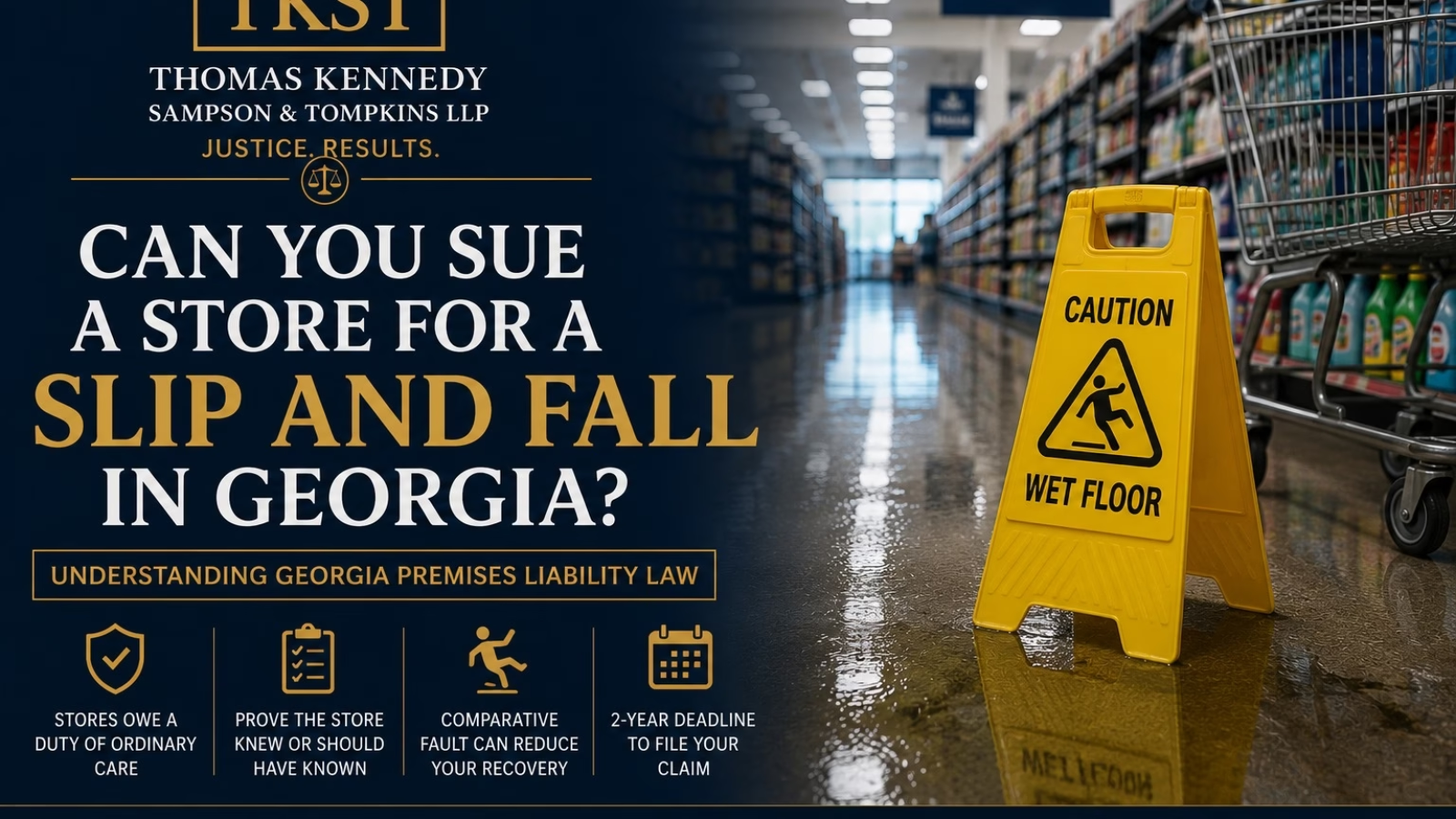
Yes. Under O.C.G.A. § 51-3-1, Georgia stores owe customers a duty of ordinary care to keep their premises safe. You can sue if you prove the store knew — or should have known — about the hazard that caused your fall, and that you did not have equal knowledge of it.
But winning is harder than most people expect. Georgia’s “superior knowledge” doctrine, its 50% comparative fault bar, and the 2025 tort reform law (SB 68) all shape whether a store fall becomes a valid claim. Here is how these cases actually work.
What Duty Does a Georgia Store Owe You?
When a business invites the public in, Georgia law classifies customers as invitees — the highest level of legal protection. The store must exercise ordinary care to keep its premises and approaches safe, which includes:
– Reasonable inspection procedures to find spills and hazards
– Prompt cleanup or warning (wet floor signs, barriers)
– Maintaining flooring, lighting, stairs, and parking areas
– Training staff to identify and respond to dangers
This duty covers the “approaches” too — sidewalks, entryways, and parking lots the store controls.
The Key Battleground: Superior Knowledge
Georgia slip and fall cases usually turn on one question: who knew about the hazard? You must show the store had superior knowledge — meaning it knew or should have known about the danger, and you did not.
Store knowledge comes in two forms:
– Actual knowledge: an employee saw the spill, or caused it.
– Constructive knowledge: the hazard existed long enough that a reasonable inspection would have found it, or an employee was close enough to see and fix it.
This is why evidence disappears fast in these cases. Surveillance footage is often overwritten within days, and sweep logs and incident reports stay in the store’s hands. The steps you take immediately after a fall — photos, witness names, an incident report, prompt medical care — mirror the advice in our guide on what to do immediately after a car accident in Atlanta: document everything before it vanishes.
What the Store’s Insurance Company Will Argue
Expect some version of these defenses:
1. “It was open and obvious.” If you could have seen the hazard by looking, the store argues you had equal knowledge.
2. “You weren’t watching where you were going.” Georgia’s modified comparative fault rule reduces your recovery by your percentage of fault — and if you’re found 50% or more at fault, you recover nothing.
3. “We had no notice.” The store claims the spill happened moments before your fall, so no inspection would have caught it.
An experienced slip and fall lawyer counters these with inspection records, video preservation letters, and witness testimony.
How SB 68 Changed Slip and Fall Cases in 2025
Georgia’s tort reform law, signed in April 2025, did not rewrite the duty stores owe — but it changed how these cases are litigated and valued:
– Medical damages are now limited to amounts actually paid or reasonably expected to be paid, not the inflated “sticker price” of medical bills.
– Defendants can demand bifurcated trials, splitting the question of fault from the question of damages.
– New limits on how attorneys can argue pain-and-suffering values to juries (so-called “anchoring” restrictions).
We broke down the full law in our analysis of how Georgia’s SB 68 tort reform changed negligent security and premises liability claims. The short version: documentation and case preparation matter more than ever.
What Compensation Can You Recover?
A successful store fall claim can recover medical expenses, lost income, diminished earning capacity, and pain and suffering. Falls are not minor events — they are a leading cause of hip fractures and traumatic brain injuries in older adults. Our overview of what compensation you can claim after a personal injury in Georgia explains each category, and how personal injury settlements work in Georgia walks through the process from demand to payment.
The Deadline: Two Years
Georgia gives you two years from the date of the fall to file suit (O.C.G.A. § 9-3-33). If you fell on government property — a city sidewalk, a county building — ante litem notice deadlines can be as short as six months. Waiting also means losing video evidence, so the practical deadline is much shorter than the legal one.
Injured in a Store? Talk to Us First
Thomas Kennedy Sampson & Tompkins LLP has held Georgia property owners accountable for decades. Whether your fall happened in a grocery store, big-box retailer, restaurant, or apartment common area, our premises liability attorneys can preserve the evidence and build your claim. Contact us for a free consultation or call (404) 688-4503.
FAQ
Can you sue a store if you slip and fall in Georgia?
Yes. Stores owe customers a duty of ordinary care under O.C.G.A. § 51-3-1. You must prove the store had superior knowledge of the hazard — it knew or should have known, and you did not.
What do I have to prove in a Georgia slip and fall case?
That a hazardous condition existed, the store had actual or constructive knowledge of it, you lacked equal knowledge, and the hazard caused your injuries.
How long do I have to file a slip and fall lawsuit in Georgia?
Two years from the date of the fall. Claims involving government property may require formal notice within six to twelve months.
What if the store says the fall was my fault?
Georgia’s modified comparative fault rule reduces your recovery by your percentage of fault. If you are 50% or more at fault, you recover nothing — so pushing back on fault arguments is critical.
Did Georgia’s SB 68 tort reform end slip and fall lawsuits?
No. The duty stores owe customers is unchanged. SB 68 changed how damages are calculated (medical bills actually paid), allowed bifurcated trials, and limited pain-and-suffering anchoring arguments.